For a post hole or two, a few bags are the obvious choice. At a yard or two, the choice stops being obvious. The work grows faster than most people expect, and the quality of the pour can suffer. Here are the numbers, side by side.
How many bags a pour takes
An 80 lb bag of premix typically yields about 0.6 cubic feet, and a cubic yard is 27 cubic feet. That works out to about 45 bags a yard. Check the yield printed on the bag you're using, since brands vary.
| Concrete needed | Bags | Weight of bags |
|---|---|---|
| ¼ cubic yard | 12 | about 960 lb |
| ½ cubic yard | 23 | about 1,840 lb |
| 1 cubic yard | 45 | about 3,600 lb |
| 2 cubic yards | 90 | about 7,200 lb |
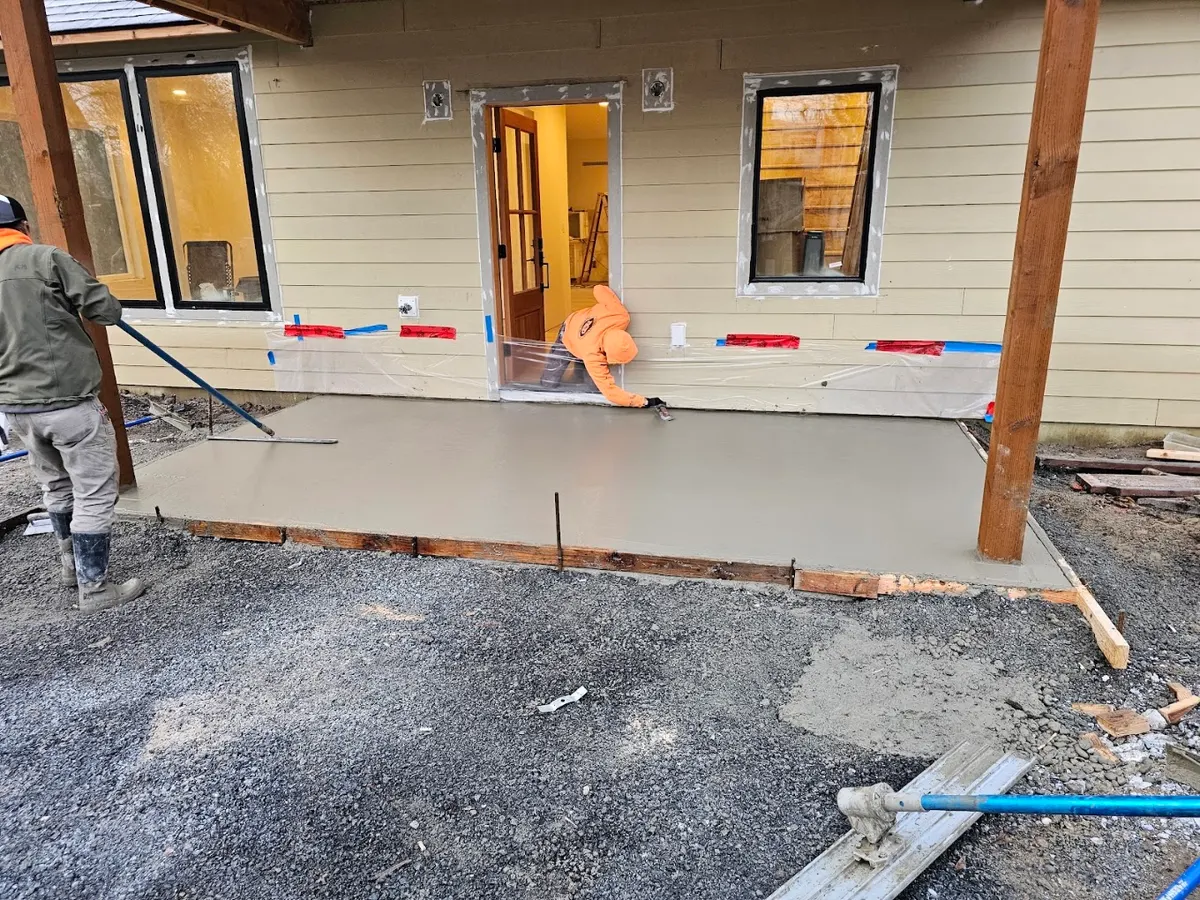
A 12 by 10 ft patio at 4 inches thick is about 1.5 yards before any margin, so roughly 67 bags. Work out your own number with the concrete calculator.
The three ways to pour
| Bags, mixed by hand | Rental mixer trailer | Delivered volumetric pour | |
|---|---|---|---|
| Best for | Post holes, repairs, small pads | A few tenths of a yard to a yard, with a crew | Slabs, patios, footings and several small pours |
| Who does the mixing | You, one batch at a time | You, in batches the mixer can hold | The truck, as the pour needs it |
| Work to place a yard | About 45 bags lifted, opened and mixed | Many batches, each loaded and dumped | The crew places and finishes |
| Consistency | Varies batch to batch | Better, but still batch to batch | One continuous, consistent mix |
| Leftover or short | Buy more bags, or have extra | Load more material, or have extra | The truck mixes more, or stops |
Why larger pours go wrong with bags
Concrete starts to set once water is added. Batches mixed one after another in a wheelbarrow rarely match, and the first batch can begin stiffening while the crew is still mixing the last. On a slab that shows up as a visible joint between batches and a surface that is harder to finish. The bigger the pour, the more that matters.
A rule of thumb
- Under about half a yard in a few spots, such as post holes: bags are reasonable.
- Around half a yard to a yard with a willing crew and good access: a rental mixer can work.
- A yard or more, a slab, a patio or a footing: a delivered pour is usually faster and more consistent, and it takes the heavy lifting out of the job.
These are general guides, not limits. Your forms, crew and schedule decide what's practical.
What a delivered pour looks like
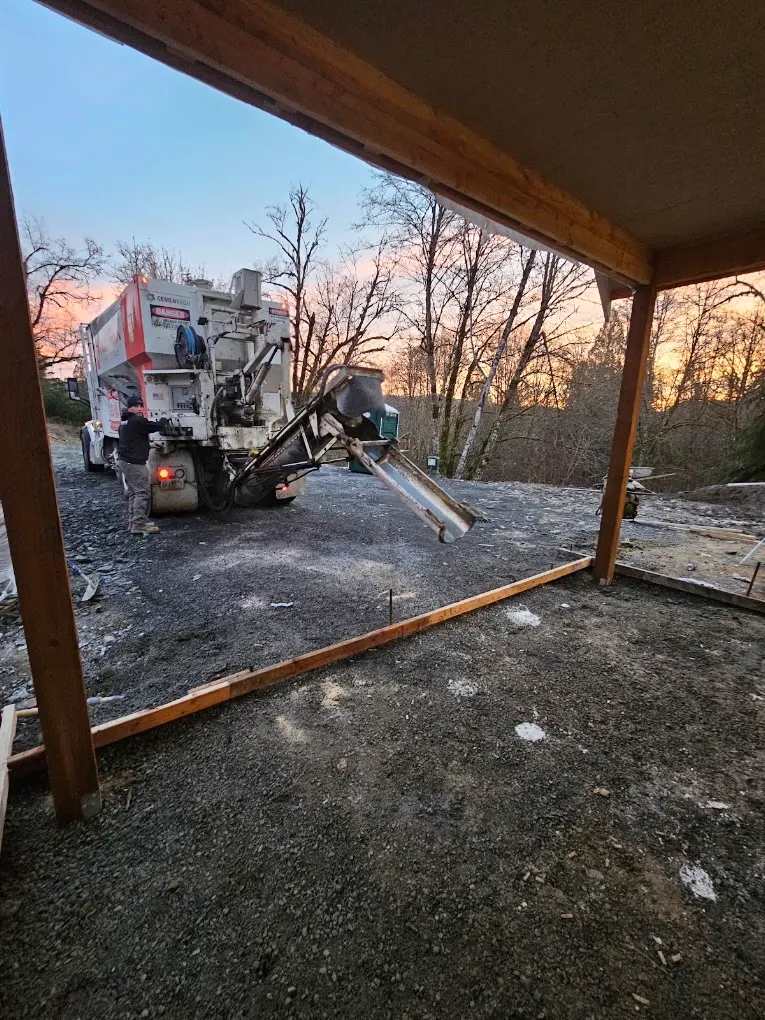
A volumetric truck carries the materials separately and mixes at your pour, only as much as it needs. You aren't buying a full drum for a small job, and you aren't loading 90 bags for a big one. There are no short-load fees, and you pay for what's placed. See volumetric vs ready-mix concrete for how it compares with a drum truck.
Thinking about a small pour? Book a delivery window online, or call (360) 852-6473 and we'll talk through it.
Source: Bag yields are typical printed values (about 0.6 cubic feet for an 80 lb bag; check your bag). One cubic yard is 27 cubic feet. The half-yard rule of thumb is general guidance, not a limit.