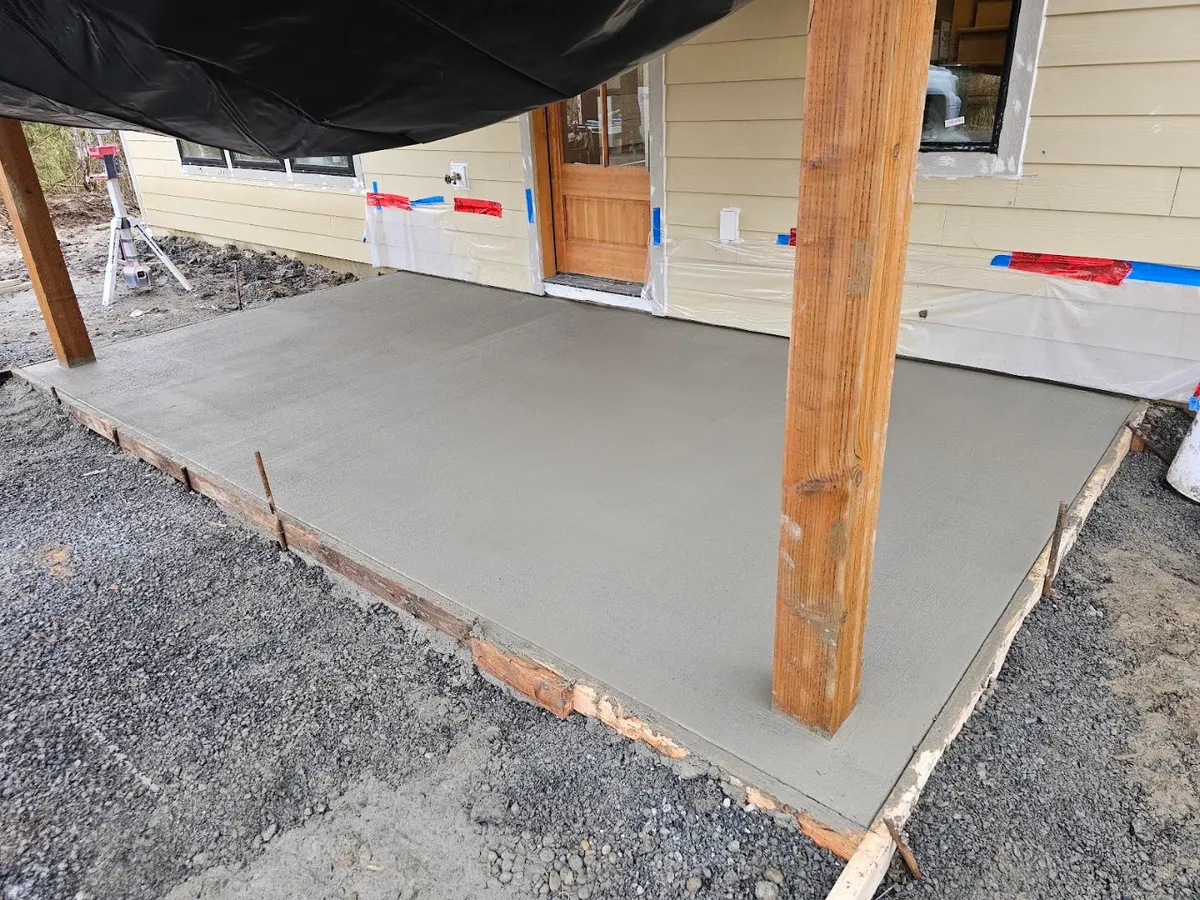
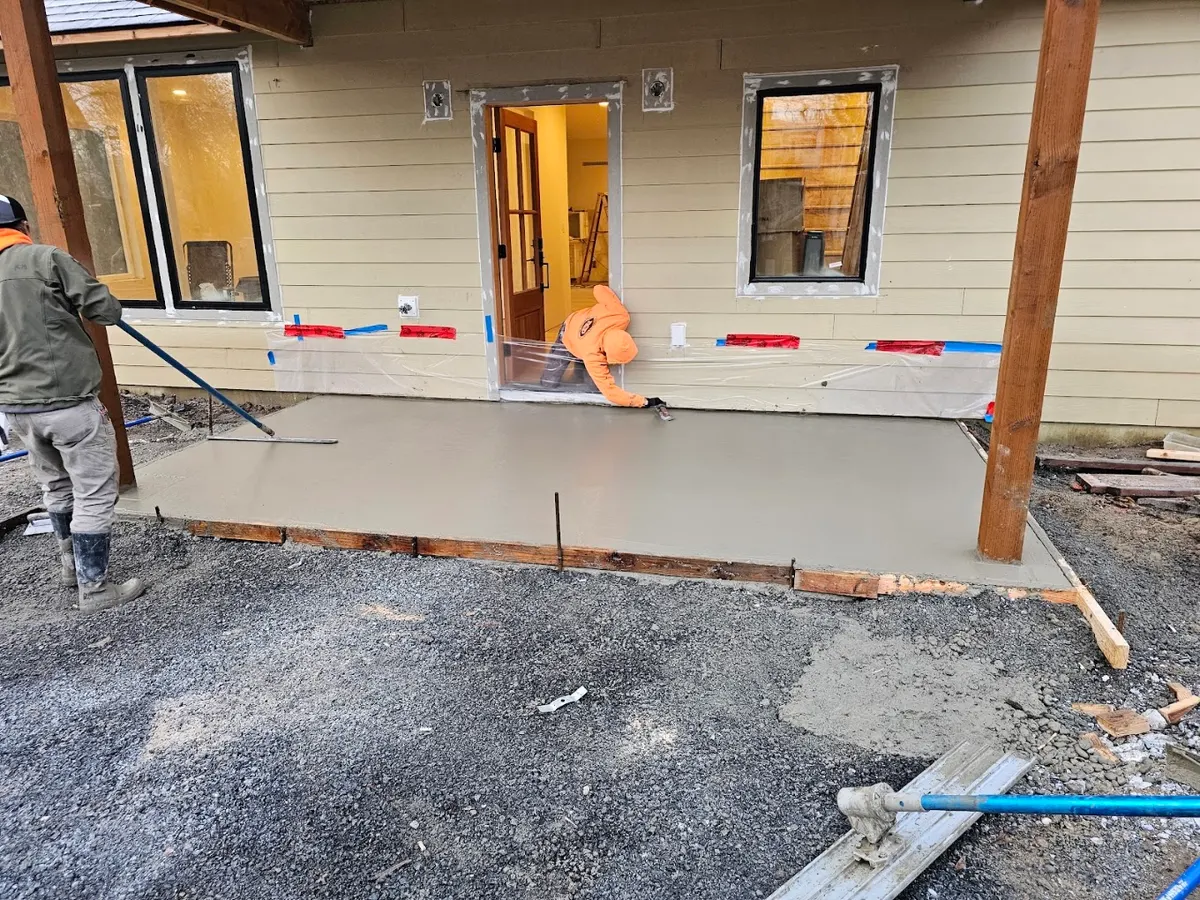
Every concrete order needs a strength, and the number is not a free choice. For most jobs it comes from your plans or your building department, not from the supplier. Here's what the number means and where it comes from.
What PSI means
PSI stands for pounds per square inch. It's the compressive strength a concrete mix is designed to reach after 28 days of curing, which is the standard age for testing. A 3,000 PSI mix is designed to resist about 3,000 pounds of crushing load on every square inch of it at 28 days. Concrete keeps gaining strength after that, and it's much weaker in its first days, which is why a new slab needs time before heavy loads.
Who sets the strength for your pour
- Your plans or engineer. Structural drawings list the strength for footings, walls, slabs and anything else that carries load. If they give a number, that's the number.
- The building code and your building department. Residential codes set minimum strengths, and concrete exposed to weather, such as porches, steps and garage slabs, can need more than a slab kept indoors. Your permit notes or the inspector will tell you what applies.
- A specification or agency. City, county and HOA work often comes with its own required mix.
- Your contractor. With no plan or requirement, an experienced finisher can recommend a strength for the job.
Strengths commonly specified by project
| Project | Commonly specified | What else to check |
|---|---|---|
| Footings and foundation walls | 2,500 to 3,000 PSI | The engineer's drawings, and reinforcement |
| Interior slabs on grade | 2,500 to 3,000 PSI | Slab thickness and base |
| Patios, walkways and steps | 3,000 to 4,000 PSI | Exposure to rain and frost; finish |
| Driveways and garage slabs | 3,000 to 4,000 PSI | Vehicle loads; exposure; thickness |
| Fence and deck post holes | Follow the post or deck plan | Hole size and depth |
| Structural or commercial work | As the engineer specifies | Plans, special inspection and testing |
These are ranges, not rules. They describe what is common on residential jobs, and they don't replace what's written on your plans.
Why higher isn't always better
A stronger mix costs more, and strength is only one of the properties that decide how a pour performs. For a patio or driveway that sees wet winters and some frost, how well the base is built, how the concrete is finished and cured, and the air content if your plans call for it matter as much as the PSI number. A 4,000 PSI slab on a poor base can still crack. Order the strength your plans call for, and put the effort into the base and the finish.
What to tell us when you book
- The strength on your plans or permit notes, if there is one.
- Any air content or slump requirement.
- What you're pouring, how much, and where the truck can get to.
Not sure what to ask for? Call (360) 852-6473 before you book and we'll talk through it. Work out your yardage first with the concrete calculator or the guide on how much concrete you need.
Source: Strength ranges are common residential specifications, not requirements for any one job. Your plans, engineer and local building department set the strength, and the building code can require more for concrete exposed to weather.