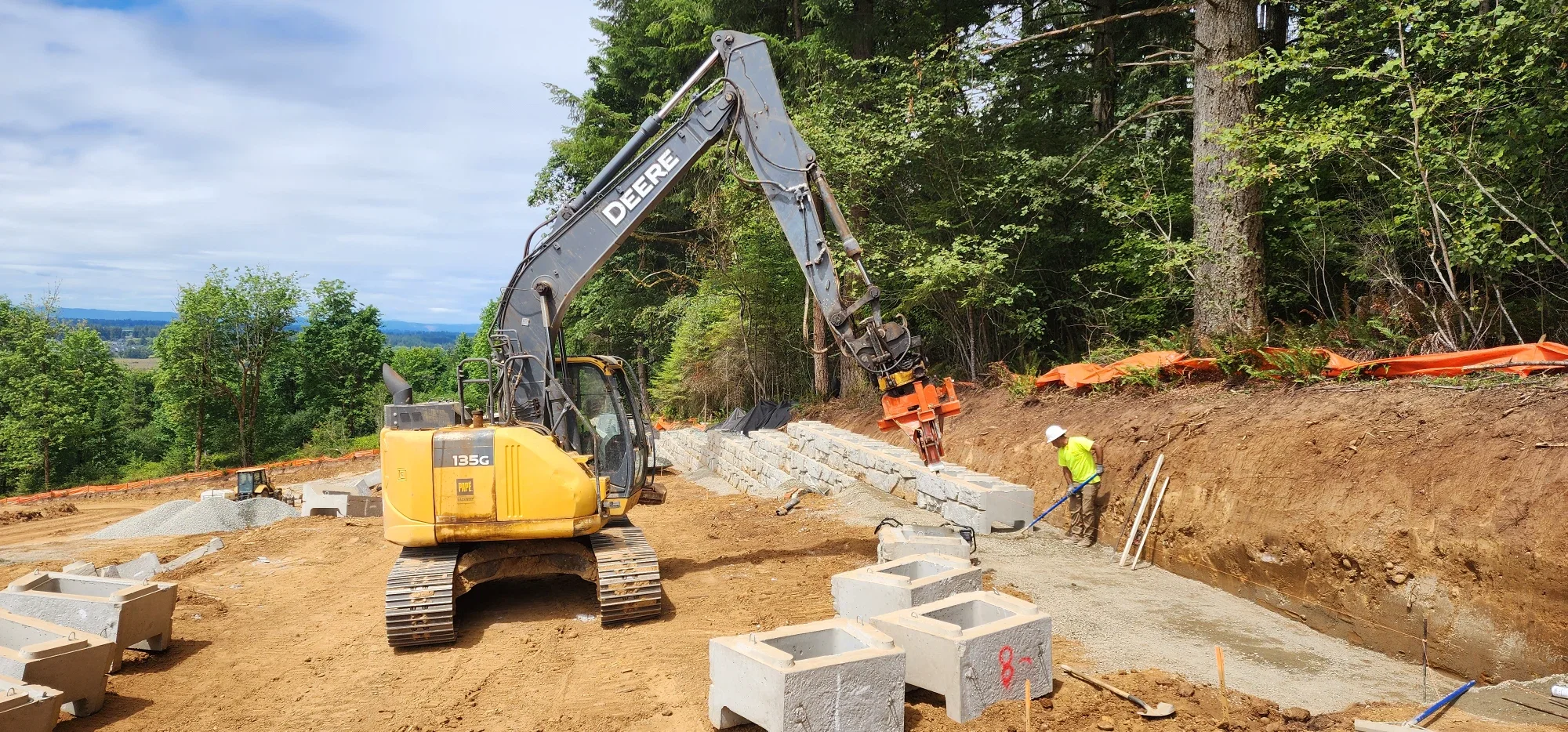
Excavator setting a Verti-Block unit next to staged hollow-core units

Buying guide

Hollow-core vs. solid precast retaining wall blocks

Two ways to make a heavy block, and what each one means for trucking, setting, drainage and your schedule.

  • 2 min read
  • 6 sections
  • Updated

The short answer

Large precast retaining wall blocks come solid or hollow-core. Solid units carry all their weight as cast concrete. Hollow-core units like Verti-Block ship lighter, then gain weight on site from crushed stone in the core, which also drains the wall. The result is more wall face per truckload, lighter picks and drainage built into the wall.

Planning data, not a wall design. Every retaining wall needs a site-specific design by a licensed engineer. We draft free preliminary designs, and a licensed PE reviews and stamps the final design on approval.

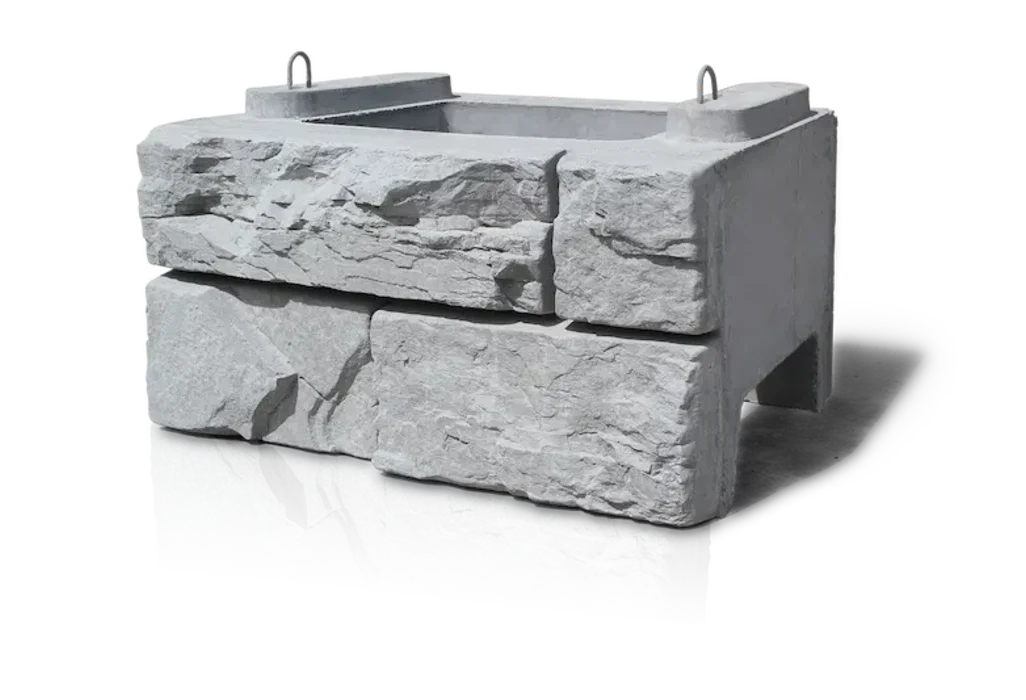
Verti-Block standard unit: stone-textured face, hollow core and two cast-in lift loops
This is Verti-Block. One standard unit: 2 ft high, 4 ft wide, 3 ft deep, about 1,760 lb.

Meet the block

One big block, set by machine

Verti-Block is a hollow-core precast concrete block with a stone-textured face. An excavator sets each unit, raised lugs lock it to the course below, and crushed stone in the core adds weight and drains the wall from top to bottom.

Diagram of a Verti-Block unit: cast-in lift loops for machine setting, a hollow core filled with crushed stone, the stone core draining the full wall height, and raised lugs that lock into the notch under the block above
  • 2 × 4 × 3 ftStandard unit: 8 sq ft of wall face
  • ~1,760 lbEmpty; about 3,035 lb with stone in the cores
  • 5.5–19 ftPublished gravity heights, no geogrid
  • 304 sq ftWall face per truckload
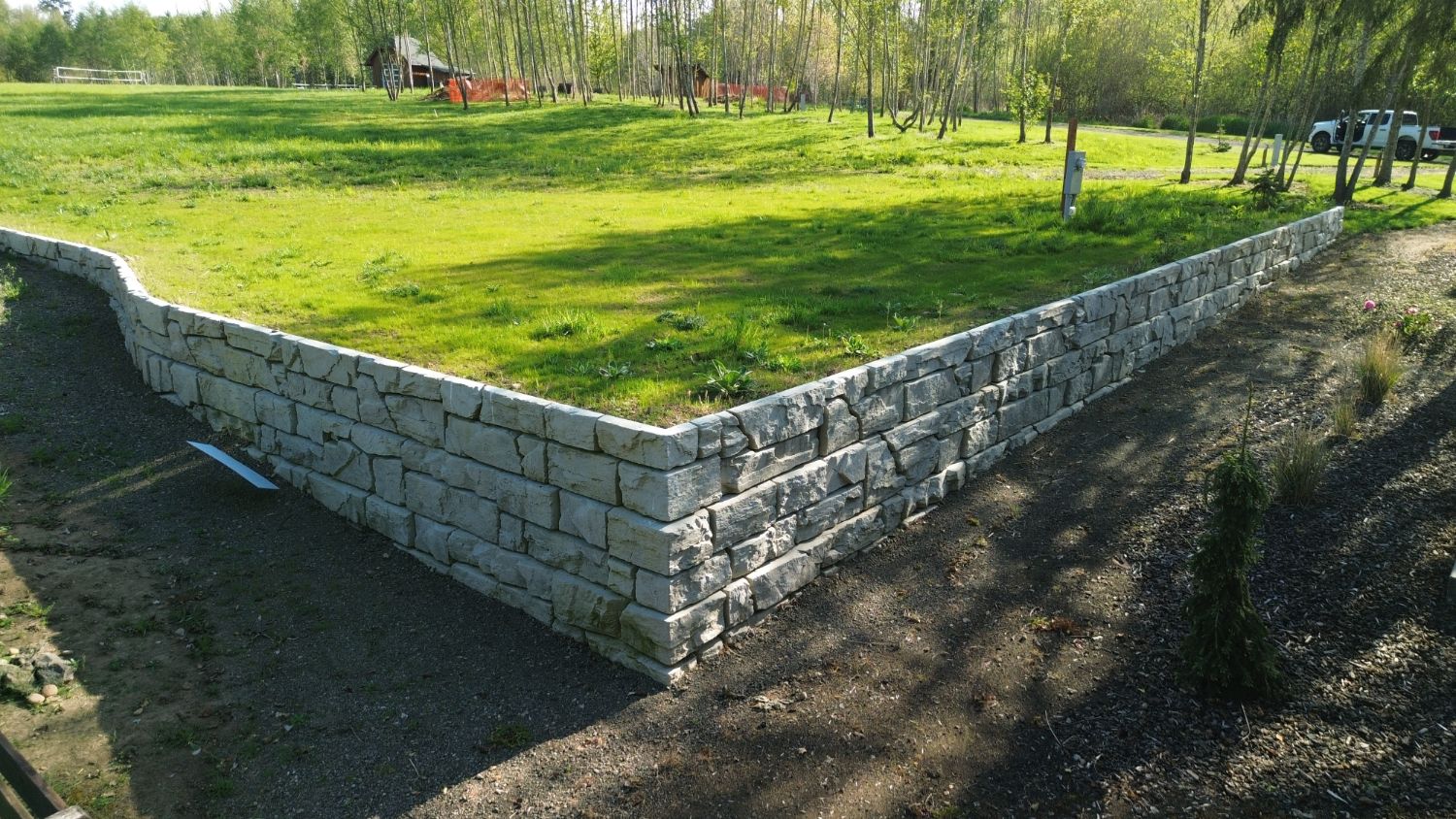
Verti-Block wall with an outside corner and a curve around a lawn
Corners and curves
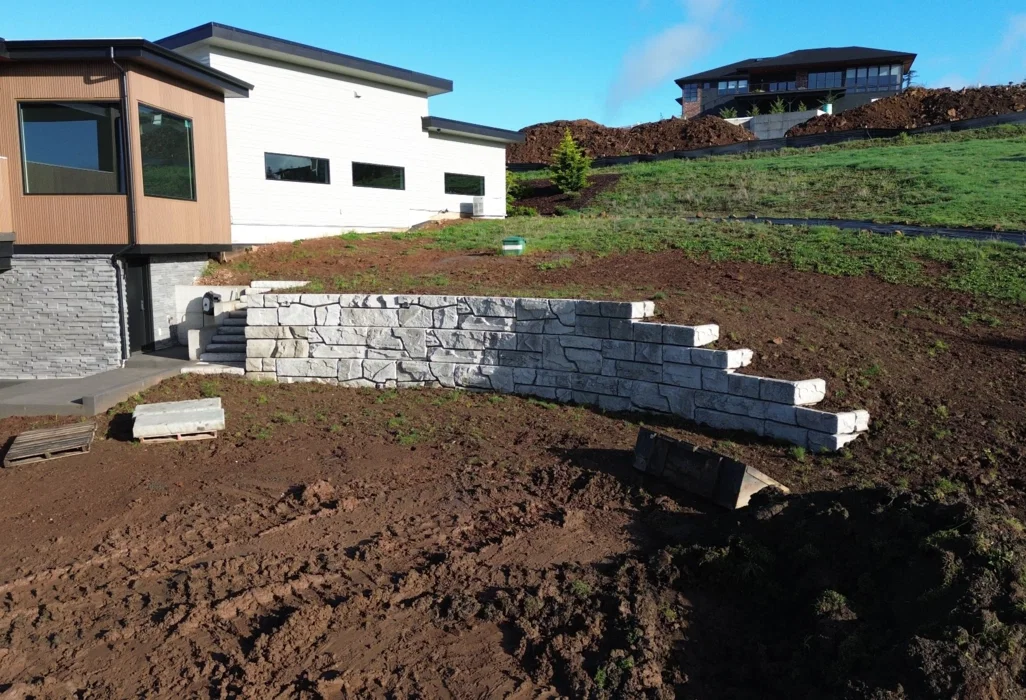
Verti-Block wall with stairs beside a modern home
Stairs and height steps
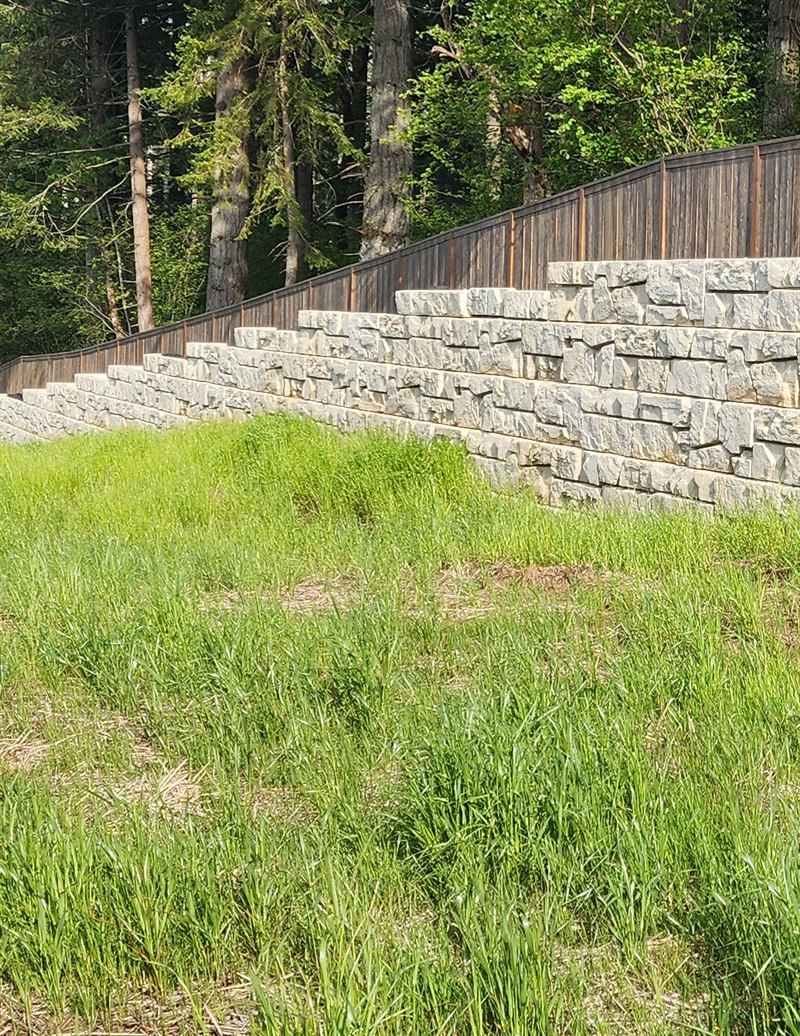
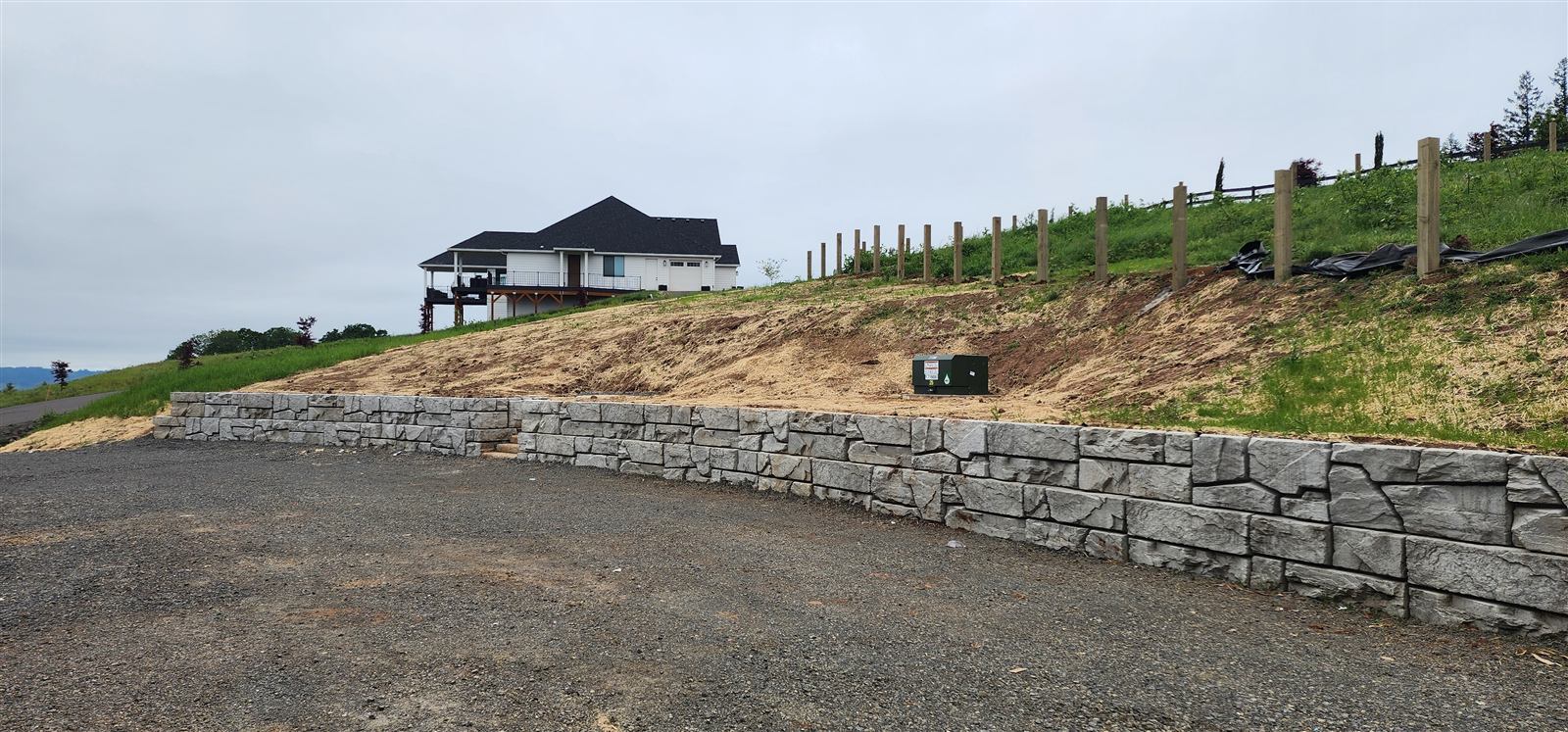
Stepped Verti-Block wall along a fence line
A top of wall that follows the grade
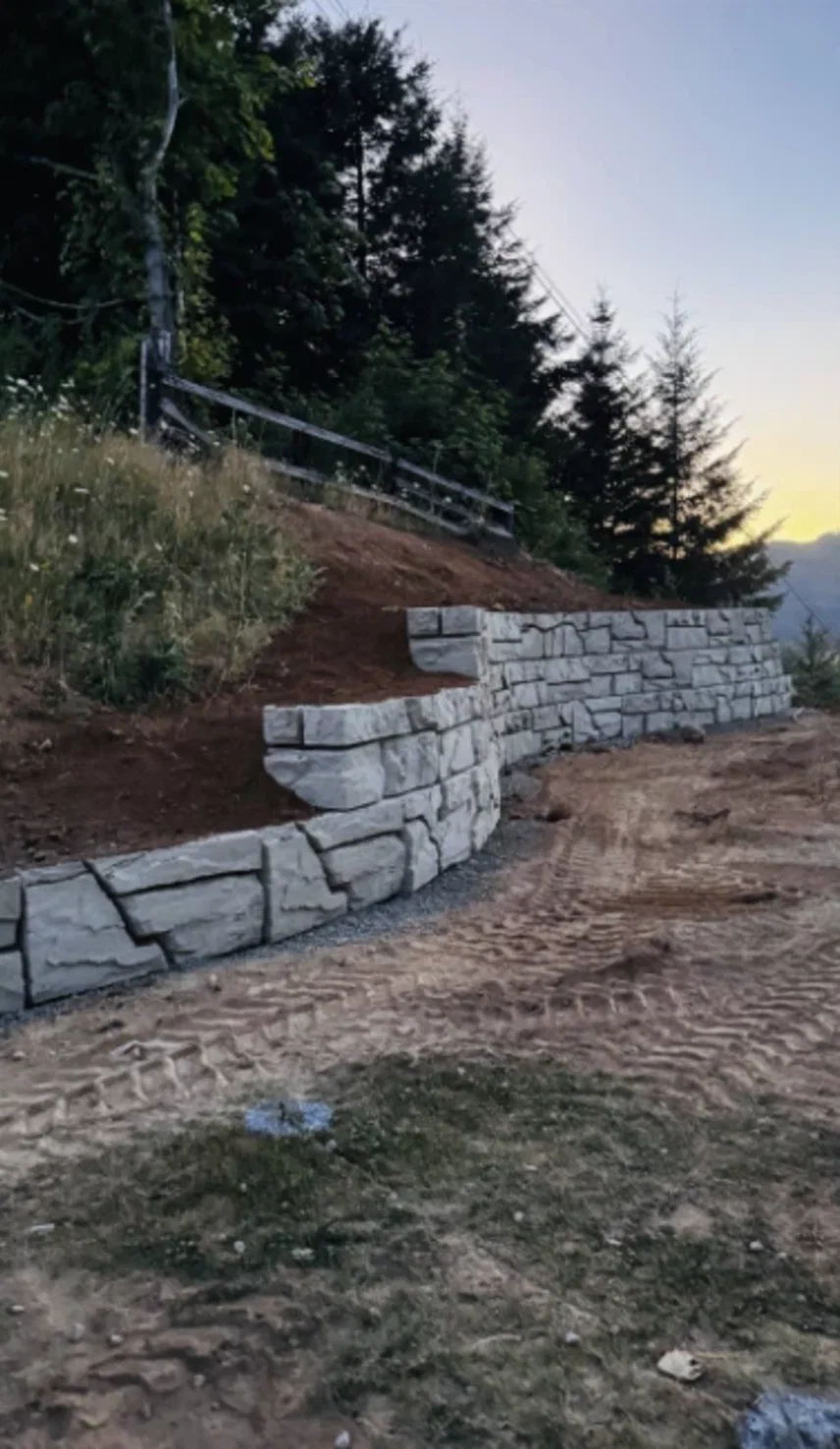
Tiered, curving Verti-Block wall on a hillside
Tiered walls

From across a job site, large precast blocks all look alike. The difference is inside: some are solid concrete all the way through, and some, like Verti-Block, are hollow and get filled with stone once they are set. That one choice changes trucking, picks, drainage and the steps your crew follows.

Two ways to build a heavy block

A retaining wall block needs weight. A solid unit arrives at full weight, all of it cast concrete. A hollow-core unit arrives lighter and becomes heavy on site: crushed stone goes into its cores as each course is set, adding weight and creating a drain at the same time.
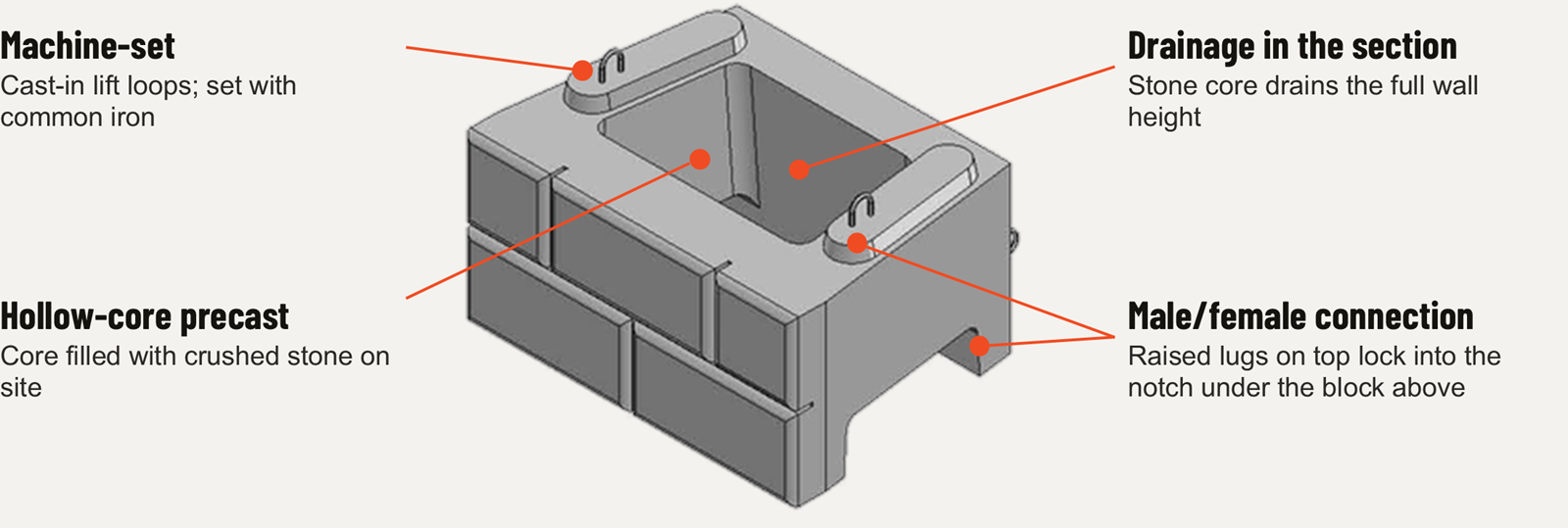
Diagram of a Verti-Block unit: cast-in lift loops, a hollow core filled with crushed stone, the stone core draining the full wall height, and raised lugs that lock into the notch under the block above
Inside a hollow-core unit. The core holds the stone that adds weight and drains the wall.

Where the weight comes from

Verti-Block standard unit (2 × 4 × 3 ft), from block detail sheet BD-02
WeightDesign unit weight
Concrete block (as delivered)About 1,760 lb142 pcf
Crushed stone in the coresAbout 1,280 lb110 pcf
Block and stone together (as designed)About 3,035 lb126 pcf

In plain terms Almost half the weight of a finished Verti-Block wall comes from local stone placed on site, not from concrete hauled on a truck.

Trucking and picks

Because hollow-core units ship without their fill, more wall fits on each truck. A Verti-Block truckload carries 304 sq ft of wall face, about double the face area per haul compared with solid large-format block. That means fewer deliveries into a tight site or work zone. Each standard unit covers 8 sq ft of wall face in one pick with an excavator and a block grab.
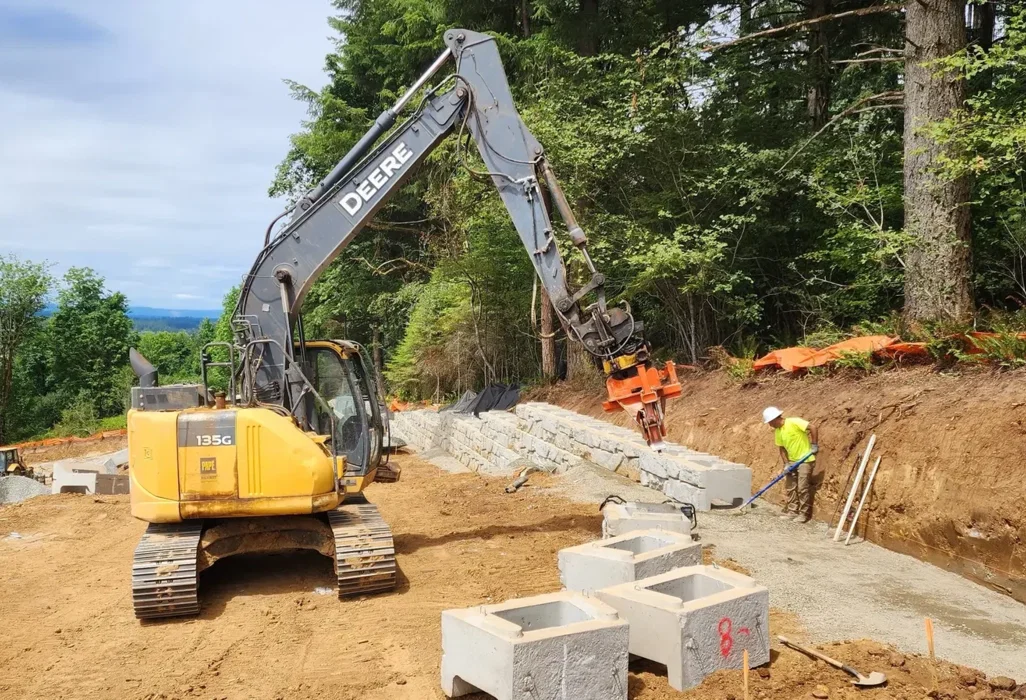
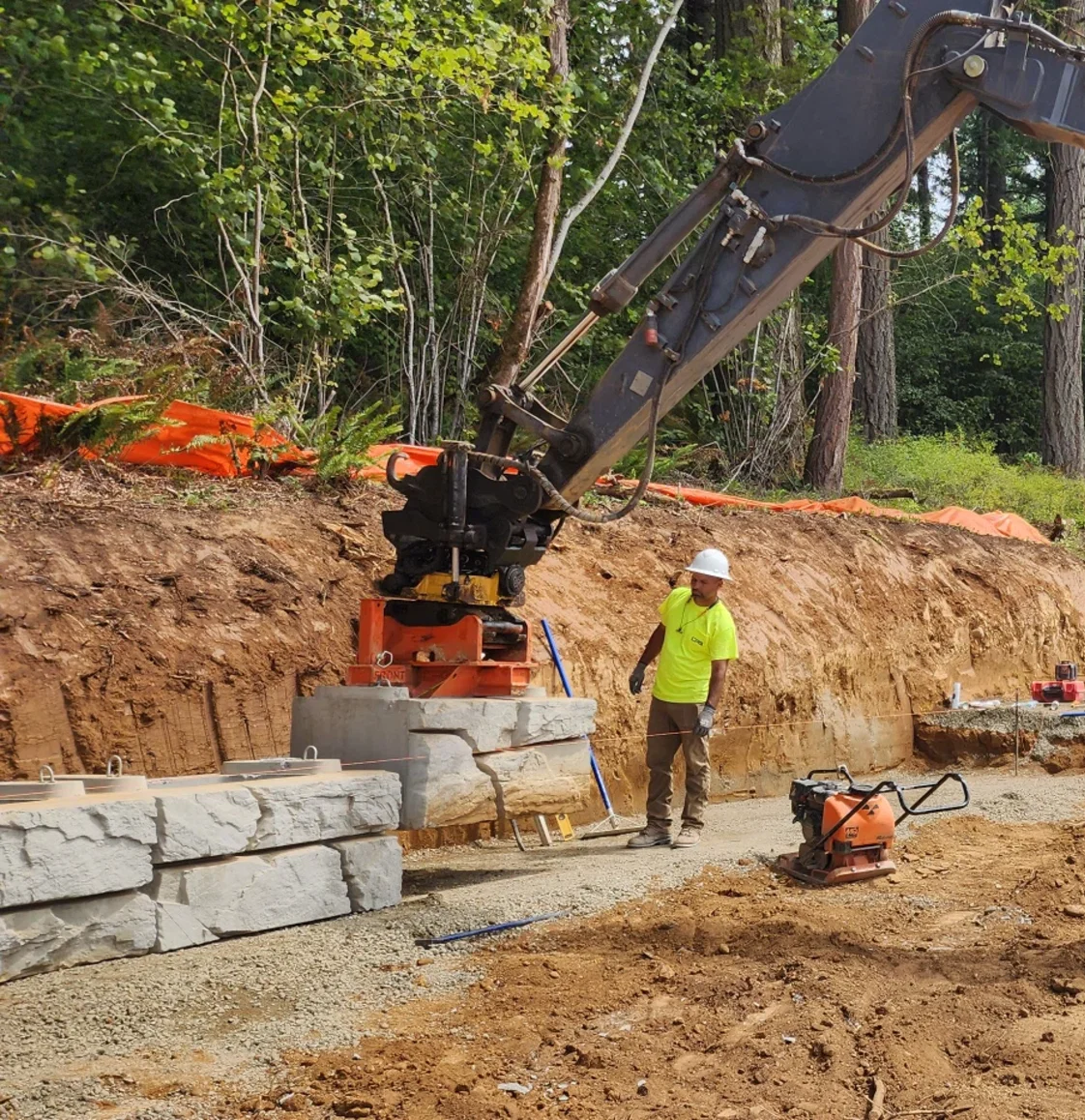
Excavator with a block grab setting Verti-Block units, with hollow-core units staged in the foreground
Units staged and set by excavator.
Verti-Block unit lowered onto a compacted gravel leveling pad while a worker checks placement
One pick, 8 sq ft of finished wall face.

Drainage

Every retaining wall design assumes the soil behind it is drained. With a solid unit, drainage has to come from a separate aggregate zone placed behind the wall. With a hollow-core unit, the stone in the cores forms a drain the full height of the wall, and a perforated pipe at the base, filter fabric and surface grading complete the system.

The trade-offs, honestly

  • Core fill is a step: hollow-core walls need clean crushed stone on site and a crew filling cores as each course goes up. Solid units skip that step.
  • Stone delivery: the core stone is a separate material to order and stage, usually from a local quarry.
  • What you get for it: lighter units to truck and set, more wall per truckload, and drainage built into the wall itself.

What to compare between any two systems

  1. Published gravity heights for your soil and loading, without geogrid.
  2. Unit weight, and the equipment it takes to set it.
  3. Wall face per pick and per truckload.
  4. How the units lock together and set the batter.
  5. Where the water goes, and which details cover it.
  6. Local supply, lead time and design support.

For the full checklist, see how to choose precast retaining wall blocks. For every Verti-Block number, see the design data.

Source: Verti-Crete Design Manual, Release 4.1 (block detail sheet BD-02), Verti-Block product data sheets, and Natrix Precast project experience (marked "in our experience").
FAQ

Common questions

Is a hollow-core block as strong as a solid block?

The wall is designed with the block and its stone fill together. A filled Verti-Block standard unit weighs about 3,035 lb at a combined design weight of 126 pcf, and the published tables show gravity walls from 5.5 ft to 19 ft without geogrid. Every wall still gets a site-specific design.

Why does a hollow-core block need gravel in the core?

The stone adds weight to the wall and forms a drain the full height of the wall. Clean crushed stone of about 1 in. goes in the cores as each course is set.

How much wall fits on one truck?

Each Verti-Block truckload carries 304 sq ft of wall face, about double the face area per haul compared with solid large-format block, because the units ship without their stone fill.

Do hollow-core blocks need a separate drainage layer behind the wall?

The stone-filled cores are the main drain. A perforated pipe at the base, filter fabric and surface grading complete the system, and where flows demand it the design adds 12 in. of gravel behind the wall (detail WD-16).

What equipment sets Verti-Block?

An excavator with a block grab. A standard unit weighs about 1,760 lb empty and the heaviest mass extender about 5,100 lb, and every unit has cast-in lift loops.

Get a free preliminary wall design.