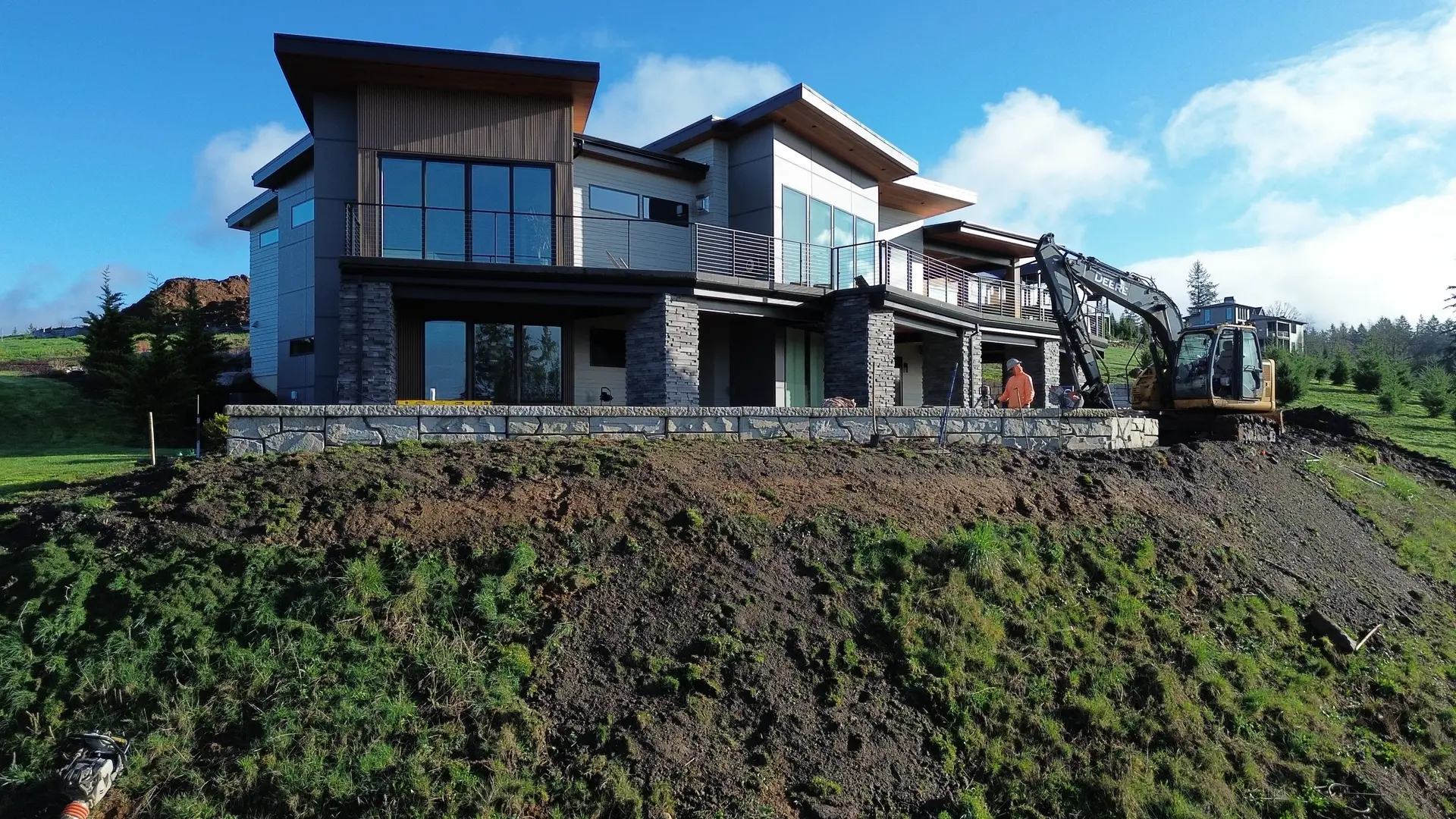
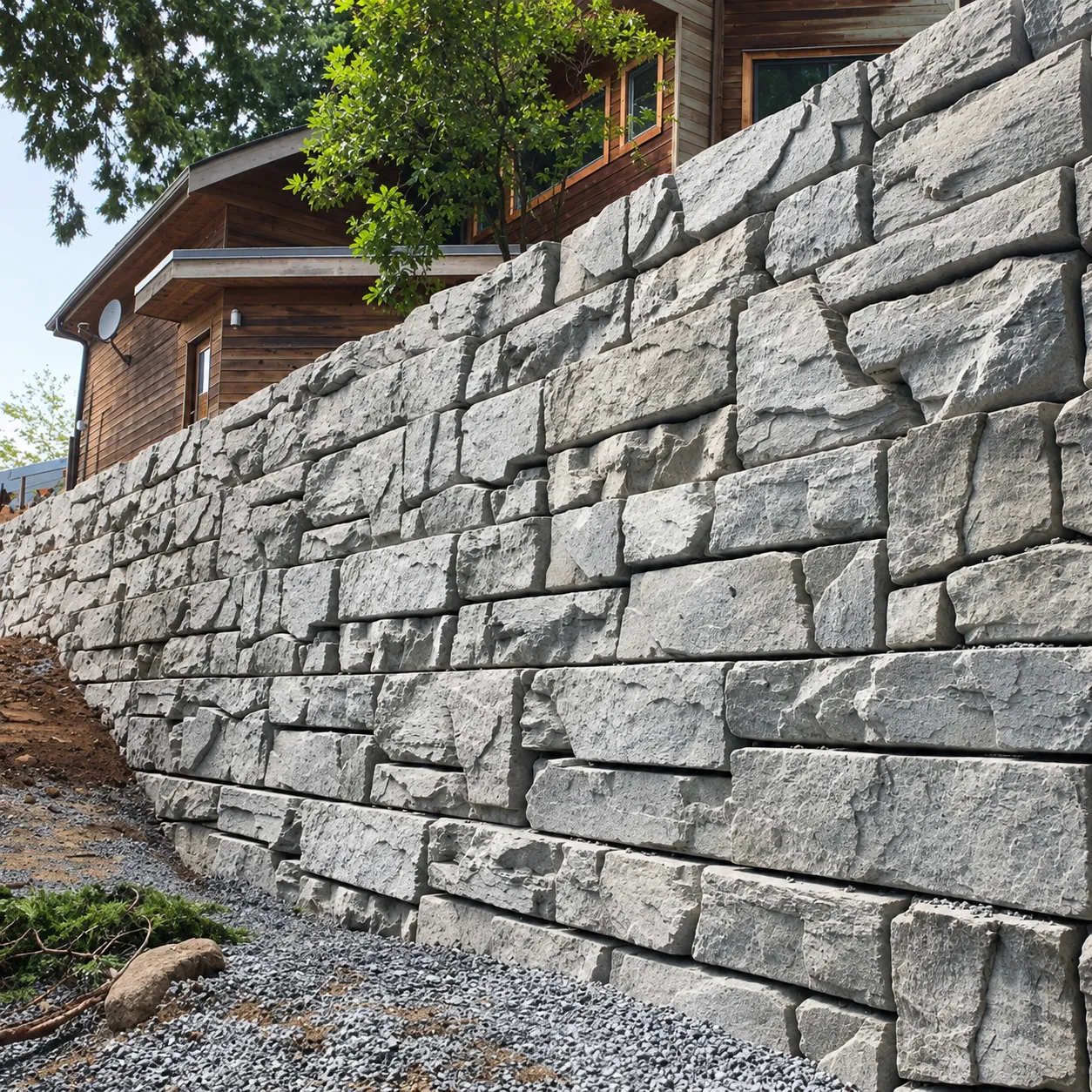
Verti-Block retaining wall being built below a modern hillside home

Buying guide

Precast block vs. cast-in-place retaining walls

Forms, rebar, cure time and a gray face, or big blocks set by machine and backfilled as they go up.

  • 2 min read
  • 5 sections
  • Updated

The short answer

For most site and landscape retaining walls, large precast block can replace a cast-in-place wall with no forms, rebar or cure time. In our experience, an installed Verti-Block wall typically runs about $45 per square foot of wall face, and the block alone about $25. Cast-in-place still fits walls that are part of a building.

Planning data, not a wall design. Every retaining wall needs a site-specific design by a licensed engineer. We draft free preliminary designs, and a licensed PE reviews and stamps the final design on approval.

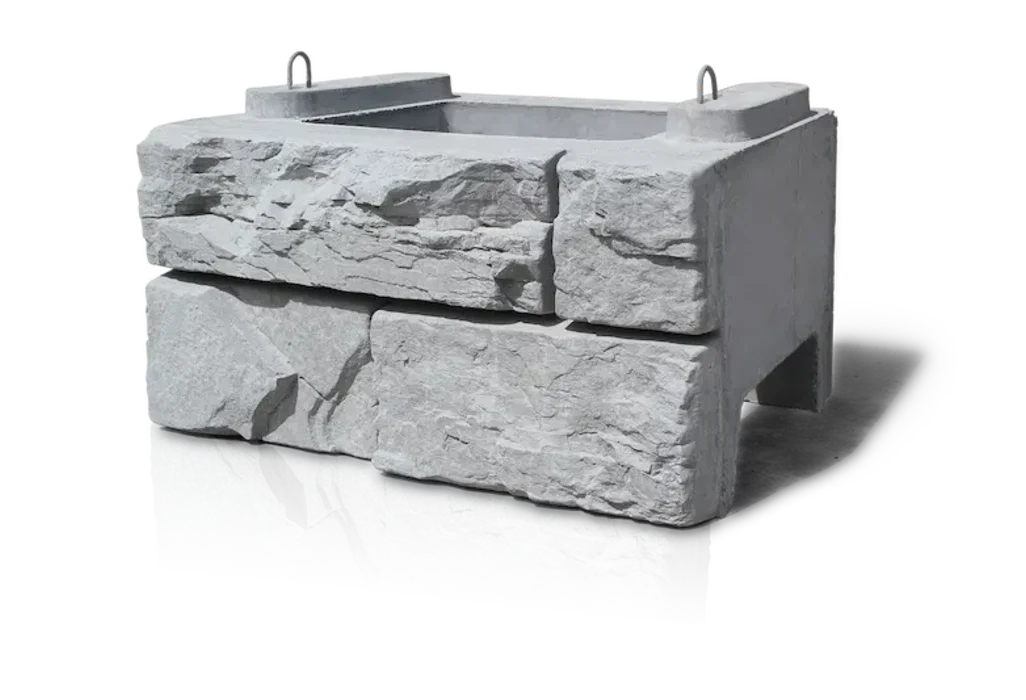
Verti-Block standard unit: stone-textured face, hollow core and two cast-in lift loops
This is Verti-Block. One standard unit: 2 ft high, 4 ft wide, 3 ft deep, about 1,760 lb.

Meet the block

One big block, set by machine

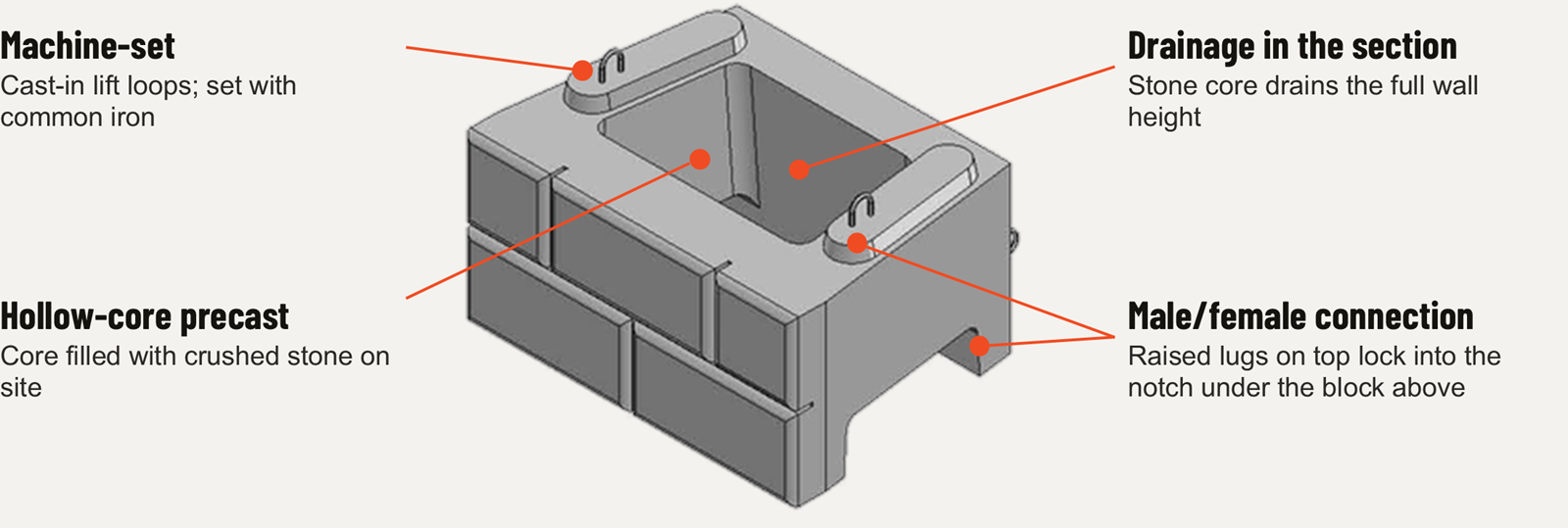
Verti-Block is a hollow-core precast concrete block with a stone-textured face. An excavator sets each unit, raised lugs lock it to the course below, and crushed stone in the core adds weight and drains the wall from top to bottom.

Diagram of a Verti-Block unit: cast-in lift loops for machine setting, a hollow core filled with crushed stone, the stone core draining the full wall height, and raised lugs that lock into the notch under the block above
  • 2 × 4 × 3 ftStandard unit: 8 sq ft of wall face
  • ~1,760 lbEmpty; about 3,035 lb with stone in the cores
  • 5.5–19 ftPublished gravity heights, no geogrid
  • 304 sq ftWall face per truckload
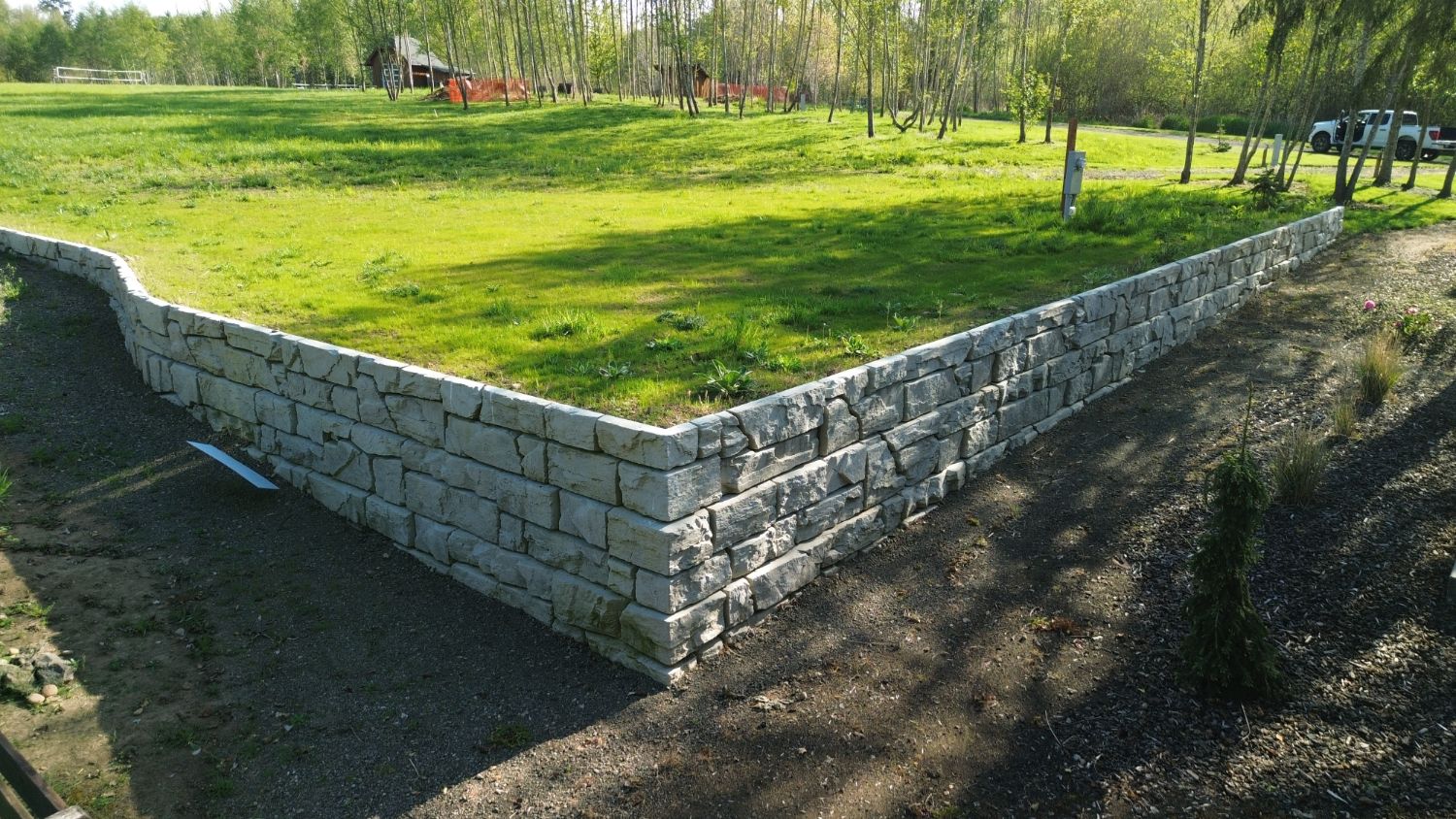
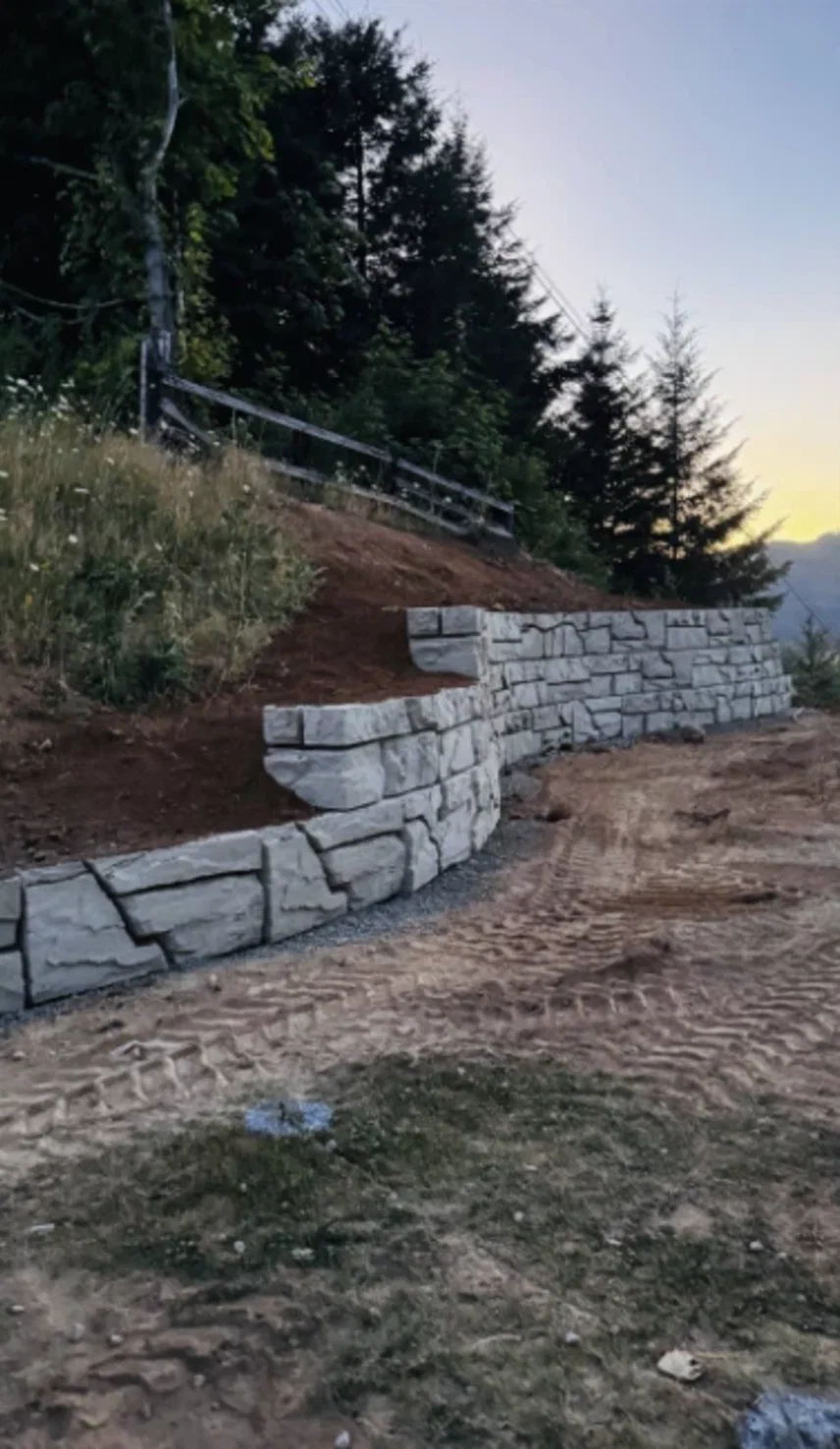
Verti-Block wall with an outside corner and a curve around a lawn
Corners and curves
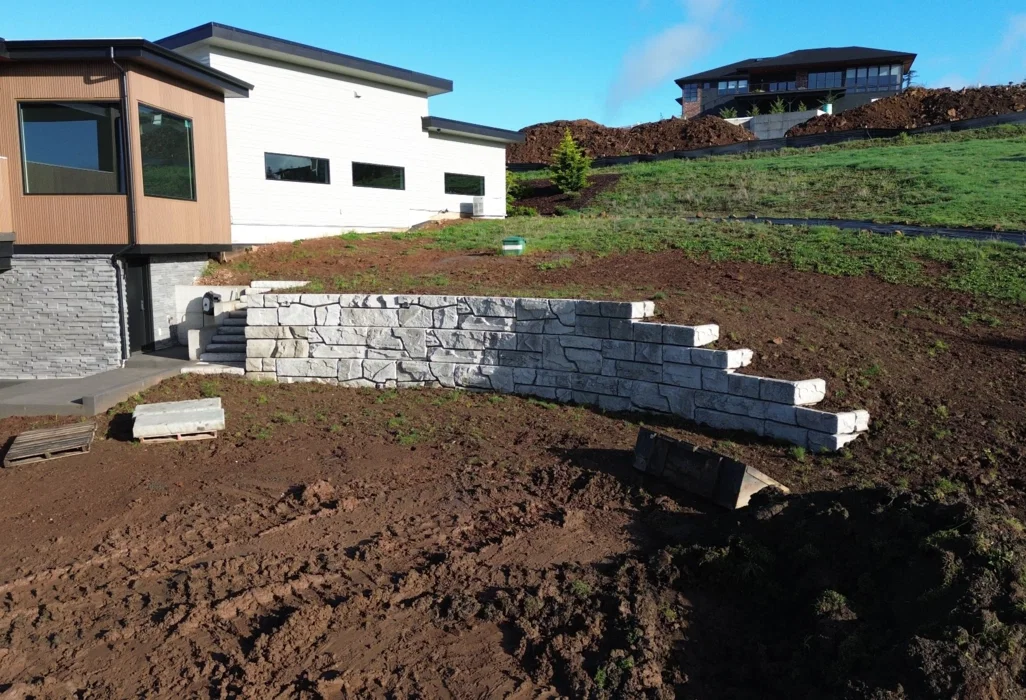
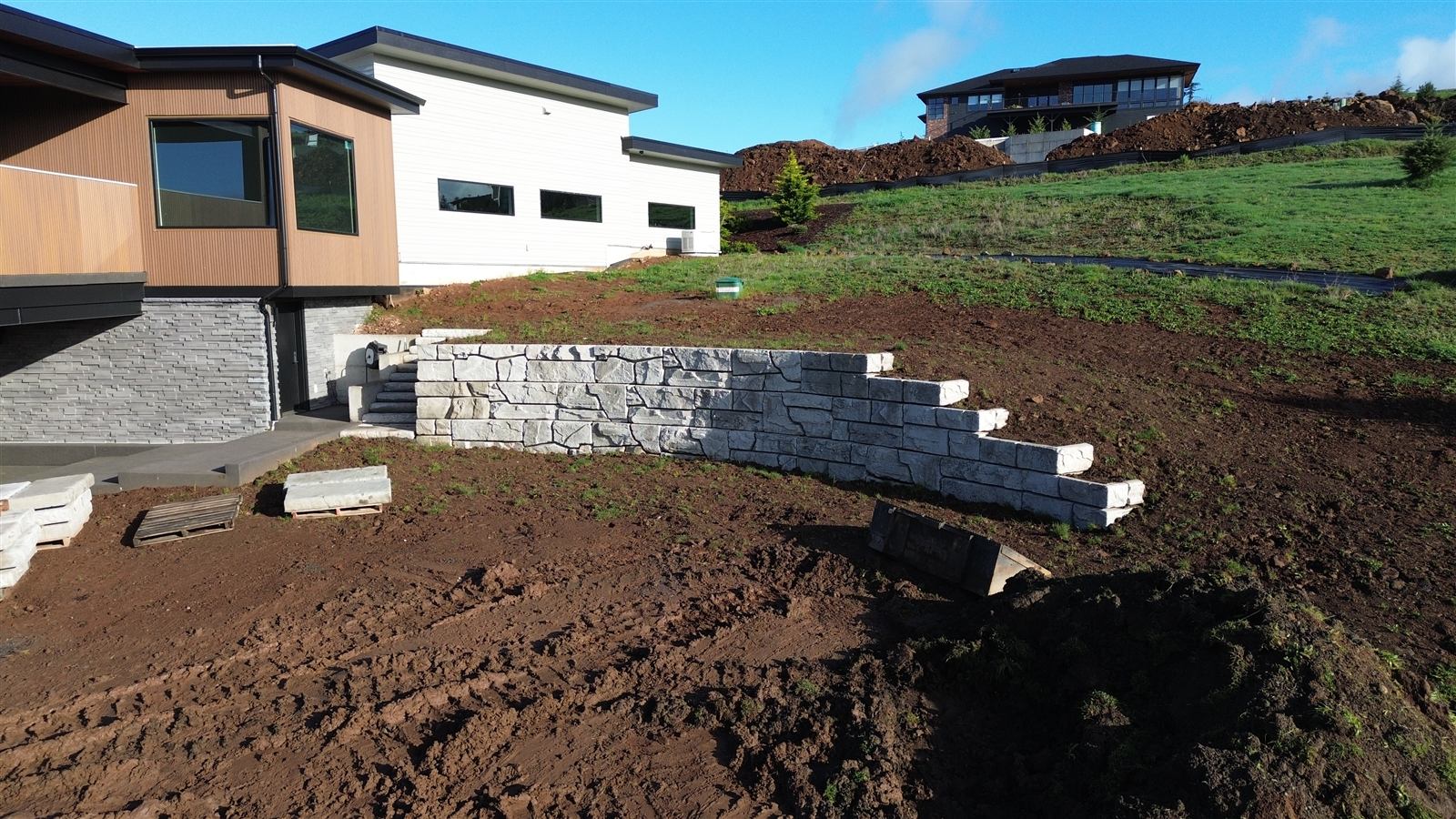
Verti-Block wall with stairs beside a modern home
Stairs and height steps
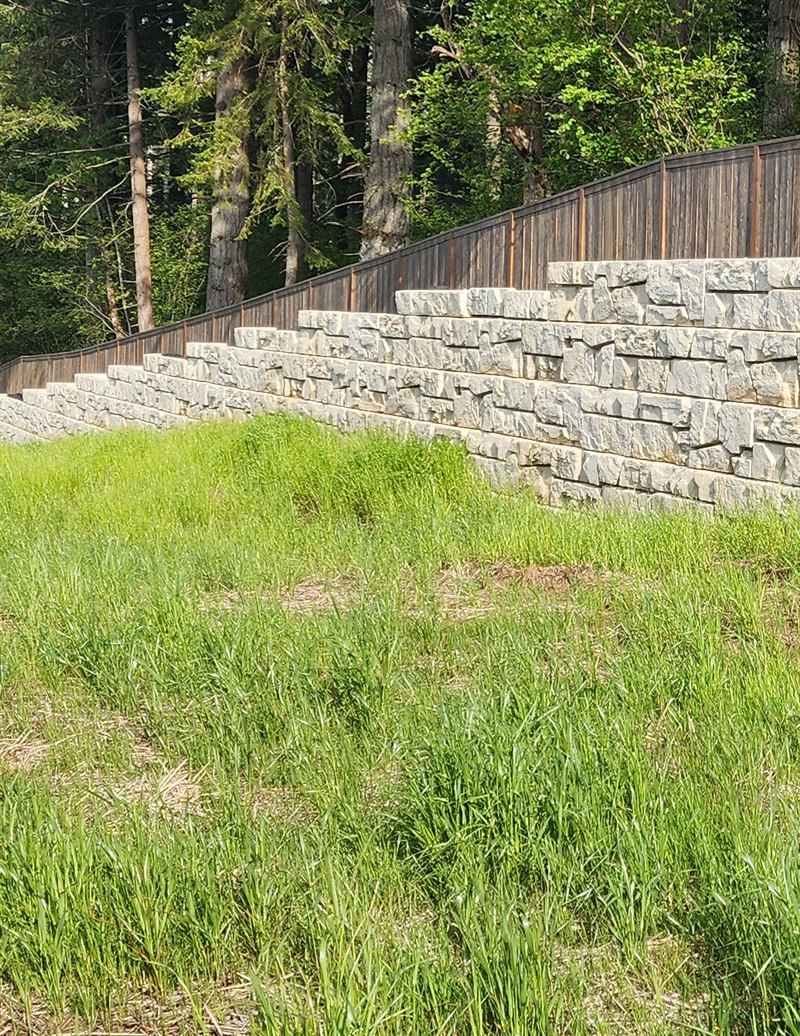
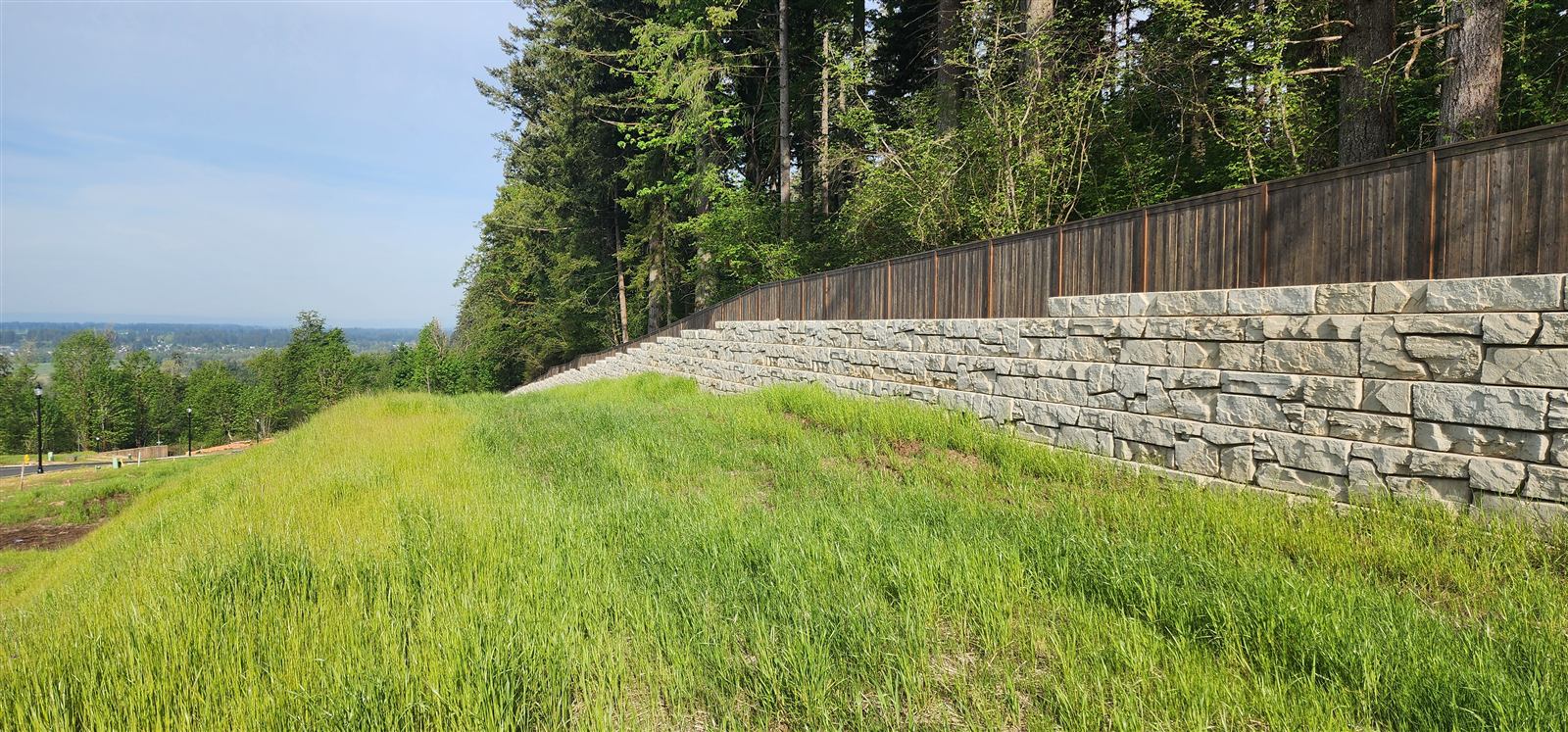
Stepped Verti-Block wall along a fence line
A top of wall that follows the grade
Tiered, curving Verti-Block wall on a hillside
Tiered walls

Cast-in-place concrete has been the default retaining wall for decades. On most site, landscape and civil walls, large precast block now does the same job with fewer steps, less time on site and a finish owners actually like.

What changes when you switch

Cast-in-place concreteVerti-Block precast
FormsBuilt, set, then strippedNone
ReinforcementRebar cut, tied and inspectedNone for gravity walls
Cure timeWait before backfillNone: backfilled as each course is set
WeatherPours depend on temperature and rainUnits are already cured when they arrive
FinishFlat gray unless form-linedCanyon Ledge stone texture, 5 in. of relief
DrainageWeep holes and a separate drain systemStone-filled cores drain the full wall height
Changes laterHard to extend or removeUnits can be reset or added to

Cost per square foot

  • ~$45Per sq ft of wall face, installed (typical, in our experience)
  • ~$25Per sq ft of wall face, block only (typical, in our experience)
  • 8 sq ftWall face per standard unit

In our experience, an installed Verti-Block wall typically runs about $45 per square foot of wall face, and the block alone about $25. For a rough sense of scale, a wall 4 ft high and 100 ft long is 400 sq ft of face: about $18,000 installed, or about $10,000 in block. These are planning numbers, not a quote. What moves them:

  • Height: taller gravity walls use deeper mass extenders in the base courses.
  • Geogrid: walls past their gravity height add grid, excavation and compacted fill.
  • Site access: room for the excavator and to stage block.
  • Excavation and drainage: how much digging the cut takes, and how much water the design has to handle.
  • Delivery distance: each truckload carries 304 sq ft of wall face from Vancouver, WA.

For a number on your wall, our free preliminary designs include block counts and a budget number.

Schedule

A poured wall moves through forming, rebar, inspection, the pour, curing and stripping before it can be backfilled. A Verti-Block wall goes up course by course: each unit is set by excavator, the cores are filled with stone, and backfill is compacted as the wall rises. In our experience, a crew sets about 450 sq ft of wall face per day, so walls go in over days rather than weeks.
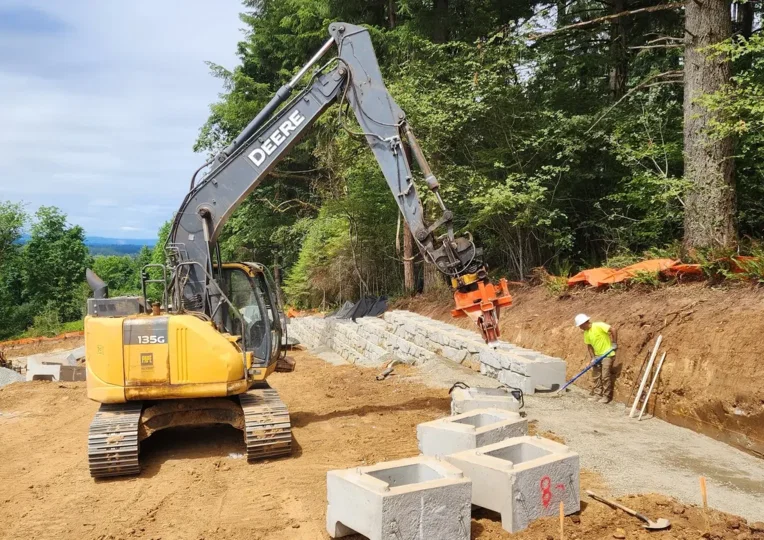
Excavator setting Verti-Block units on a residential hillside job
Set by machine, no forms.
Finished Verti-Block wall with a stacked-stone face beside a home
The finished face reads as stacked stone.

When cast-in-place is still the better call

  • Walls that are part of a building: a wall that doubles as a foundation or basement wall is usually cast in place.
  • A smooth vertical structural face: where the design calls for a flat, plumb concrete face.

Swapping a poured wall on a bid

  1. Send us the plans: the wall line, the section and any geotechnical data.
  2. We draft a preliminary design: block counts, mass-extender layout, geogrid if needed, and a budget number.
  3. Stamped on approval: a licensed PE reviews and stamps the final design for the submittal.

Estimating the swap? See estimating precast block walls and value engineering.

Source: Verti-Crete Design Manual, Release 4.1, Verti-Block product data sheets, and Natrix Precast project experience (marked "in our experience"). Costs are typical 2026 figures, not a quote.
FAQ

Common questions

How much does a Verti-Block retaining wall cost per square foot?

In our experience, an installed Verti-Block wall typically runs about $45 per square foot of wall face, and the block alone about $25 per square foot. Height, mass extenders, geogrid, access, excavation and delivery distance all move the number, so our free preliminary designs include a budget number for your wall.

Should contractors use precast block instead of a cast-in-place wall?

For most site, landscape and civil retaining walls, yes: there are no forms, rebar or cure time, units are set by excavator, and the face reads as stacked stone. Cast-in-place still fits walls that are part of a building or need a smooth vertical structural face.

Can precast block replace a cast-in-place wall in a value-engineering submittal?

Yes, with an engineered design. Natrix drafts a free preliminary design with block counts and a budget number, and a licensed PE reviews and stamps the final design for the submittal.

How long does a precast block wall take compared with a poured wall?

A poured wall waits on forming, rebar, inspection, curing and stripping before backfill. A Verti-Block wall is backfilled as each course goes up. In our experience, a crew sets about 450 sq ft of wall face per day, so walls go in over days rather than weeks.

Can a precast block wall hold a driveway or parking lot above it?

Yes, when it is designed for it. Verti-Block's published gravity tables include a level 250 psf surcharge case, with heights from 5.5 ft to 17 ft depending on soil, and the engineer of record designs for the actual loads.

Get a free preliminary wall design.