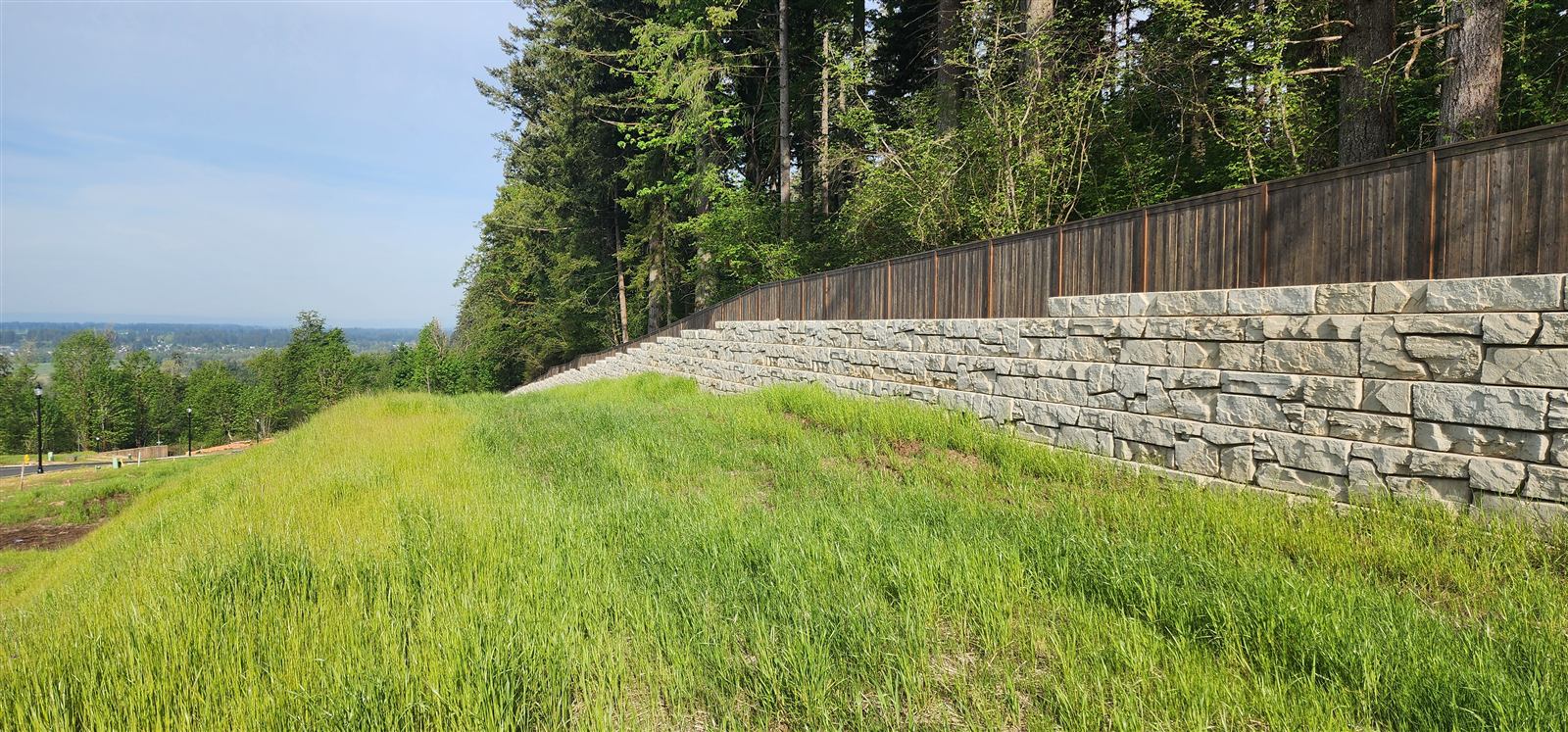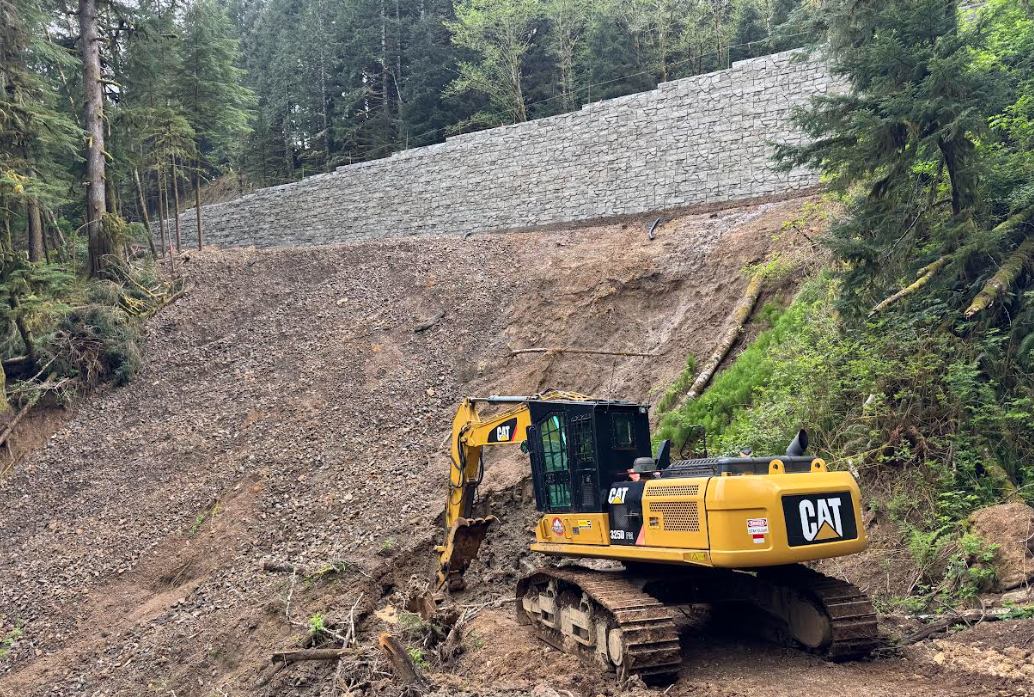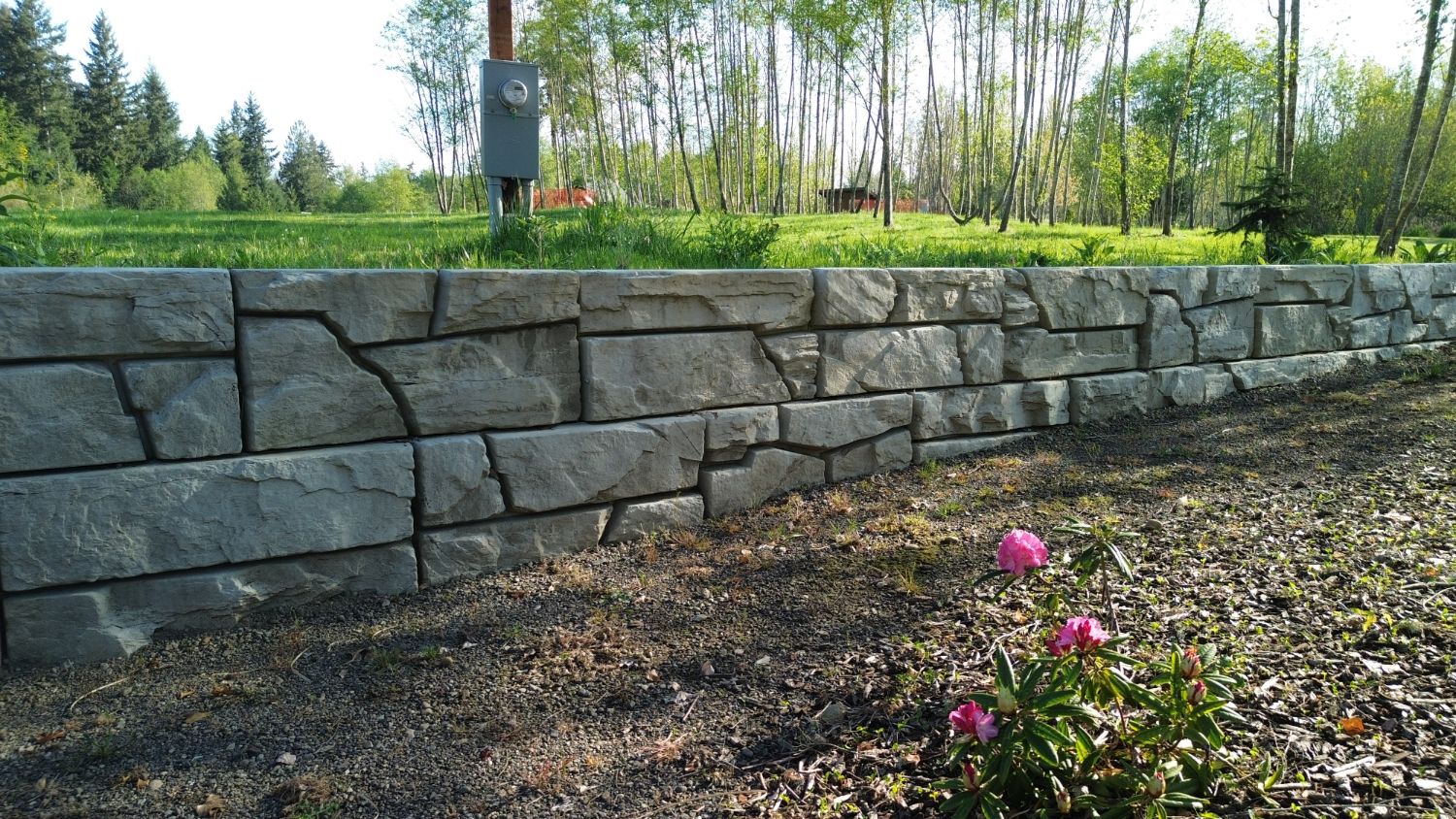
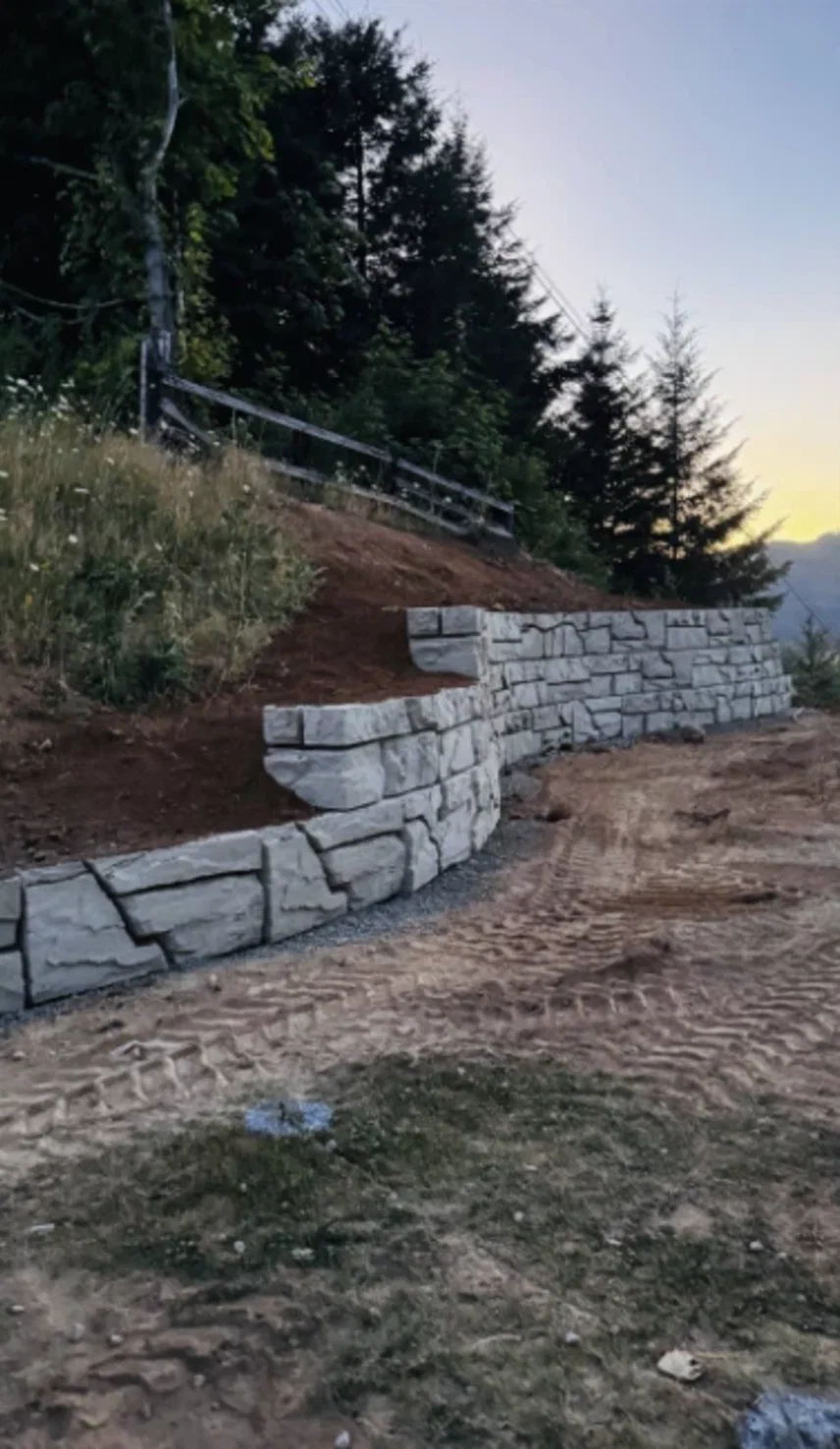
If you compare retaining wall systems by the block quote alone, large precast block can look like the expensive option. But nobody buys blocks. They buy a finished wall, and most of what a finished wall costs isn't the block.
Why the block quote is the wrong number
- ~$25Per sq ft of wall face, block only (typical, in our experience)
- ~$45Per sq ft of wall face, installed (typical, in our experience)
In our experience, the block is a little over half of an installed Verti-Block wall. The rest is labor, equipment time, excavation, backfill, drainage and trucking, and that's where systems differ most. Compare installed cost per square foot of finished wall, and the picture changes.
Where the savings come from
1. Install time
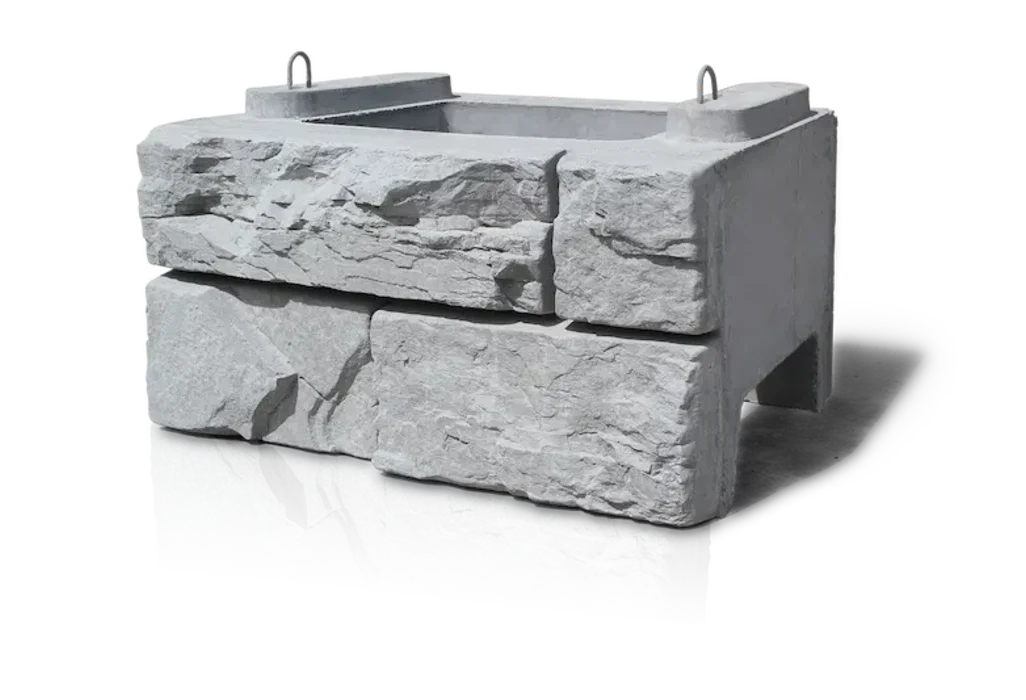
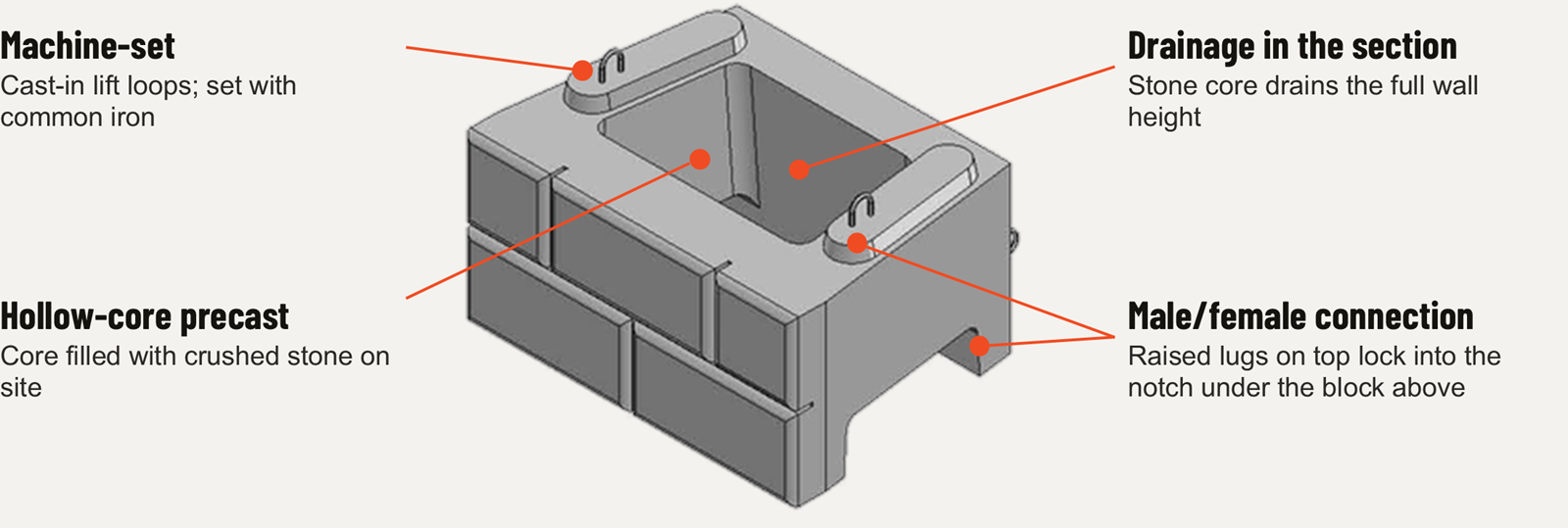
Each standard unit is 8 sq ft of finished wall face, set in one pick by an excavator. The male/female connection sets the batter on every course, and there are no forms, rebar or cure time. In our experience, a crew sets about 450 sq ft of wall face per day. Fewer days on site means fewer days of crew, equipment and supervision.
2. Native soil instead of truckloads of rock
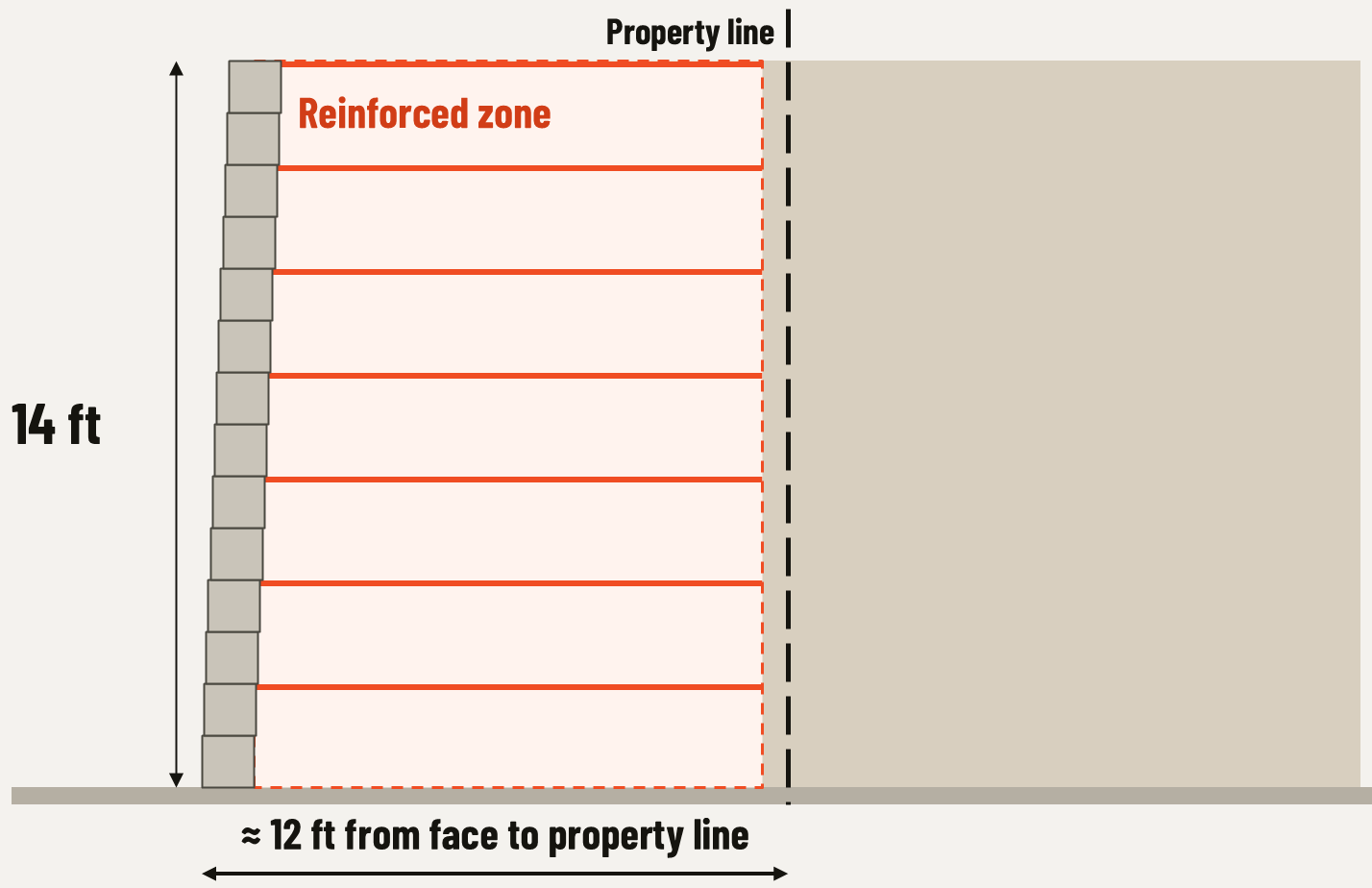
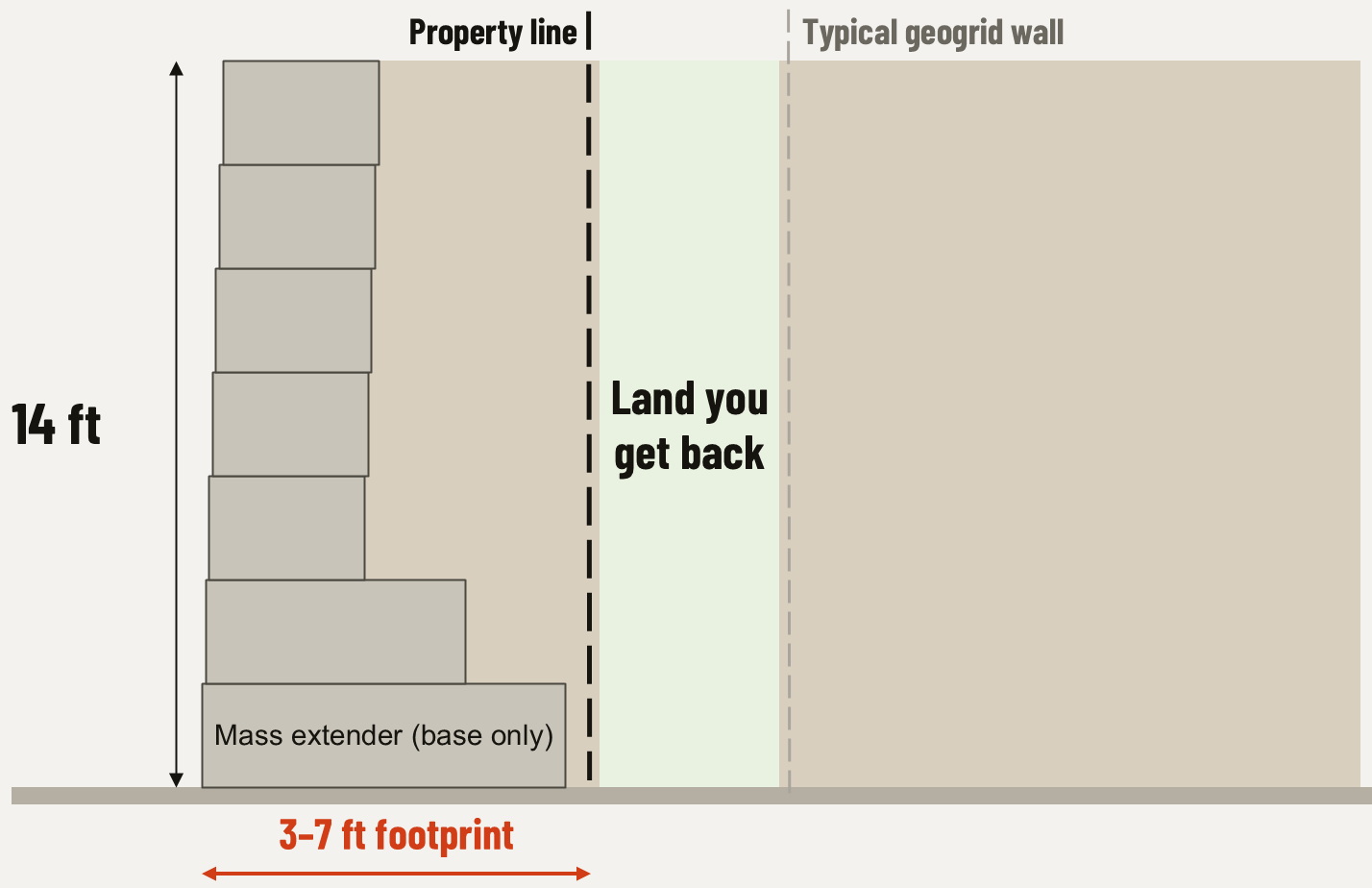
A geogrid-reinforced wall needs a zone behind it, often 0.65 to 0.95 times the wall height, dug out and rebuilt in compacted lifts, often with imported select fill. For a wall 10 ft high and 100 ft long, a zone 7 ft deep is about 260 cu yd of soil to excavate and rebuild.
A Verti-Block gravity wall skips that zone. Its mass extenders typically backfill with compacted native soil, so no imported structural fill is needed. The cores do take crushed stone, about 11.6 cu ft per standard unit, but that stone is also the wall's drain.
3. Drainage built into the block
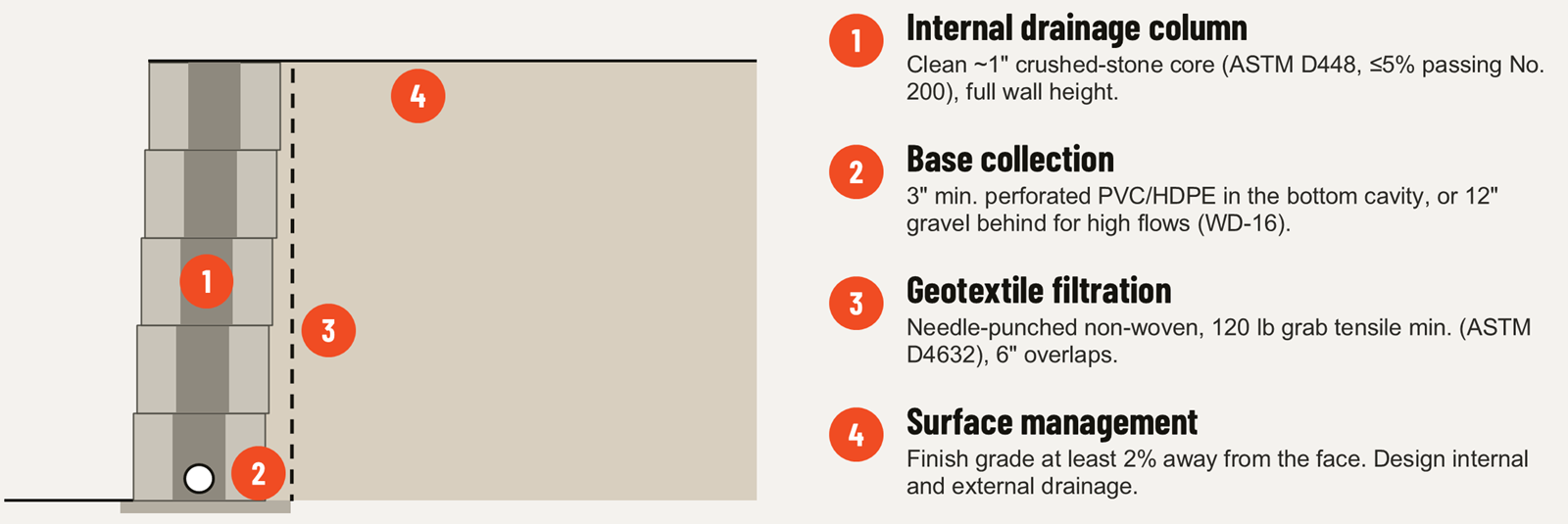
Every wall design assumes drained backfill. In Verti-Block, crushed stone in the hollow cores forms a drain the full height of the wall, with a perforated pipe at the base, filter fabric and surface grading. The design adds gravel behind the wall only where water flows demand it (detail WD-16).
4. Fewer deliveries
Hollow cores ship empty, so each truckload carries 304 sq ft of wall face, about double the face area per haul compared with solid large-format block.
5. No geogrid up to gravity heights
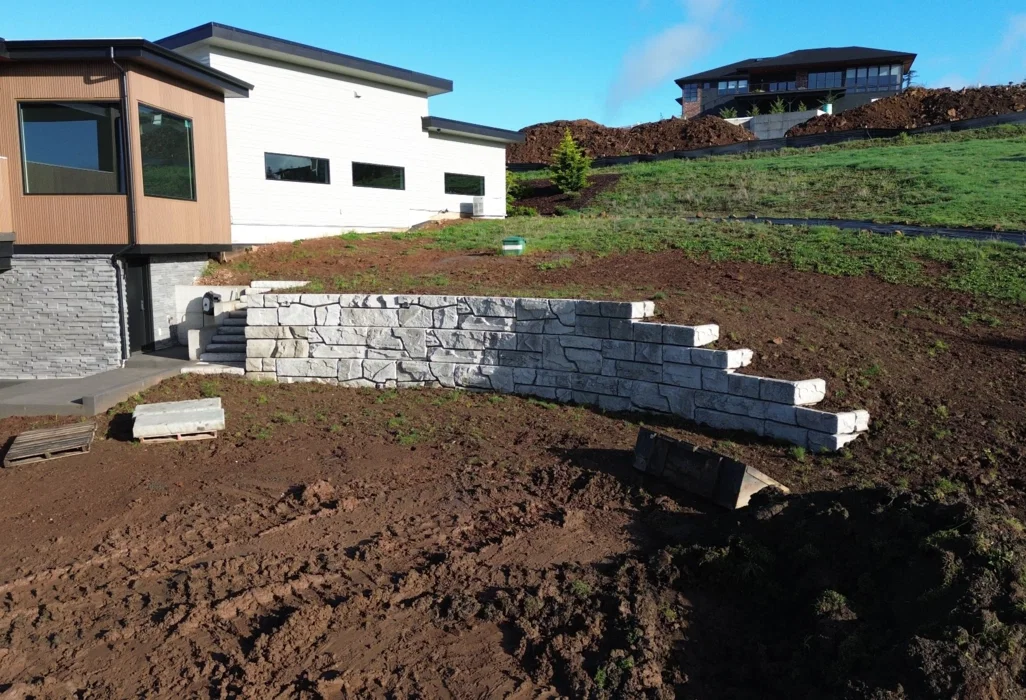
Published gravity heights reach 19 ft without geogrid in good soils, and 24.5 ft in gravelly soil with the 12-inch setback. Below those heights, there's no grid to buy, place or compact around.
The value after it's built
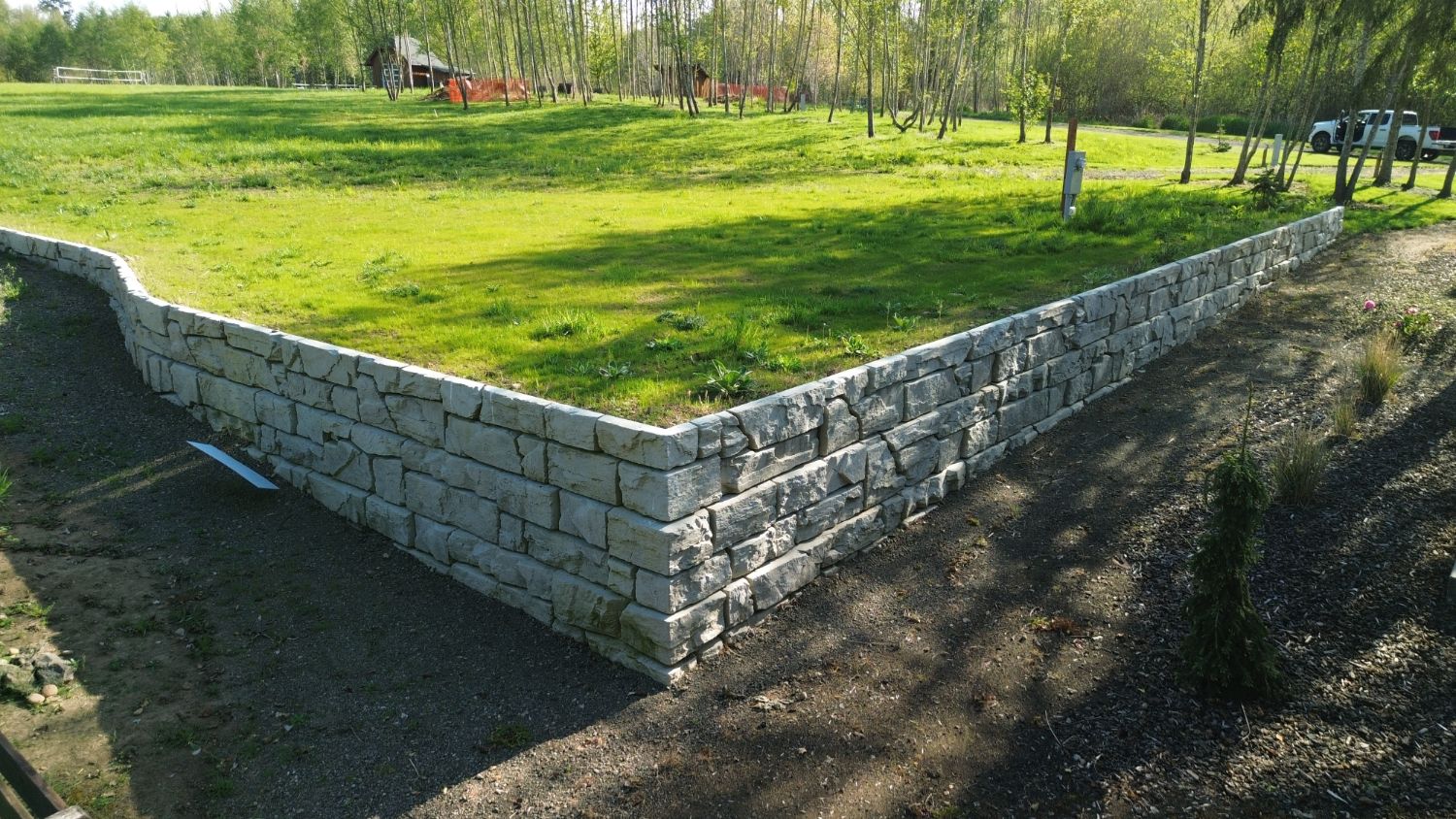
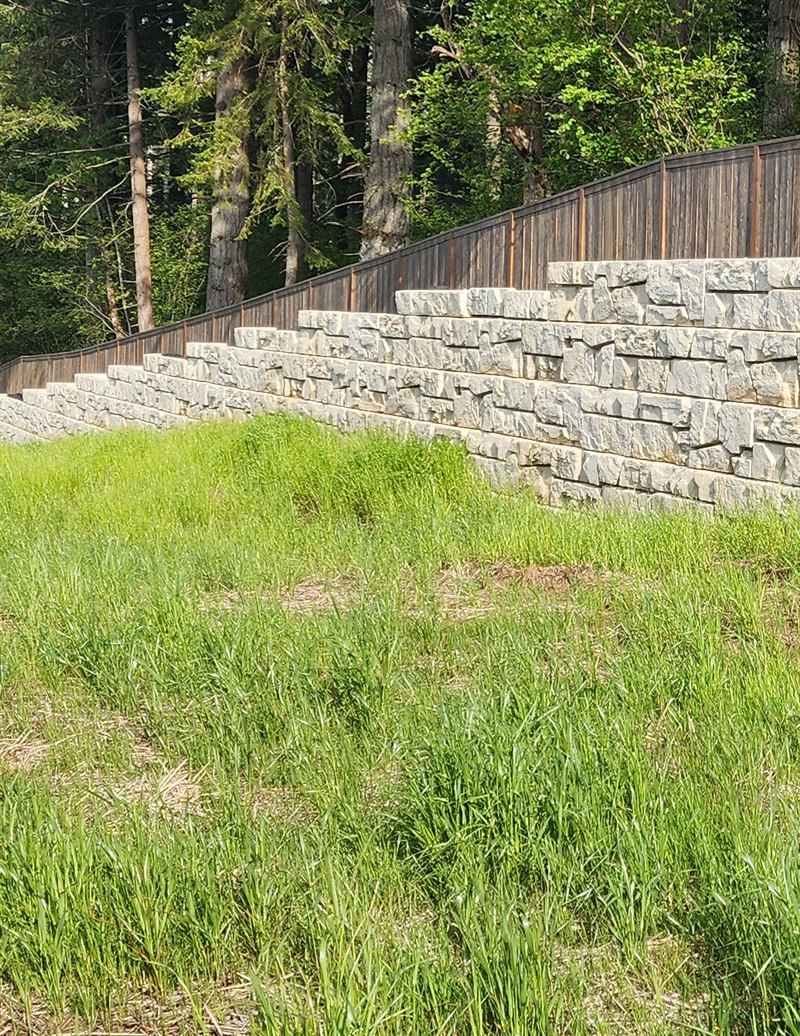
- A finish that adds value: the Canyon Ledge face reads as stacked stone. On one subdivision, the builder's team told us the wall could support about a $10,000 premium per lot. See why production builders choose Verti-Block.
- Durability: units made to ASTM C666 freeze-thaw requirements or an approved DOT mix.
- Usable ground: no buried grid behind the wall to work around later.
- Local supply: cast and stocked in Vancouver, WA, with a short haul across Washington and Oregon.
Comparing quotes apples to apples
When you line up two wall systems, ask each quote:
- What is the installed cost per square foot of finished wall?
- Does it include geogrid, and excavating and rebuilding the reinforced zone?
- How much imported fill or drainage rock does it need?
- How many days will the crew and equipment be on site?
- How many truckloads of block will it take?
For the take-off math, see estimating precast block walls and value engineering. For a number on your wall, our free preliminary designs include block counts and a budget number.
Source: Verti-Crete Design Manual, Release 4.1 (block detail sheet BD-02), Verti-Block product data sheets, and Natrix Precast project experience (marked "in our experience"). Costs are typical 2026 figures, not a quote.